La Gomera Beaches: Where to Swim, Walk and Watch the Sunset
Find a beach that fits your day, from sandy harbour bays to remote walking destinations, with photos and links to our detailed guides.

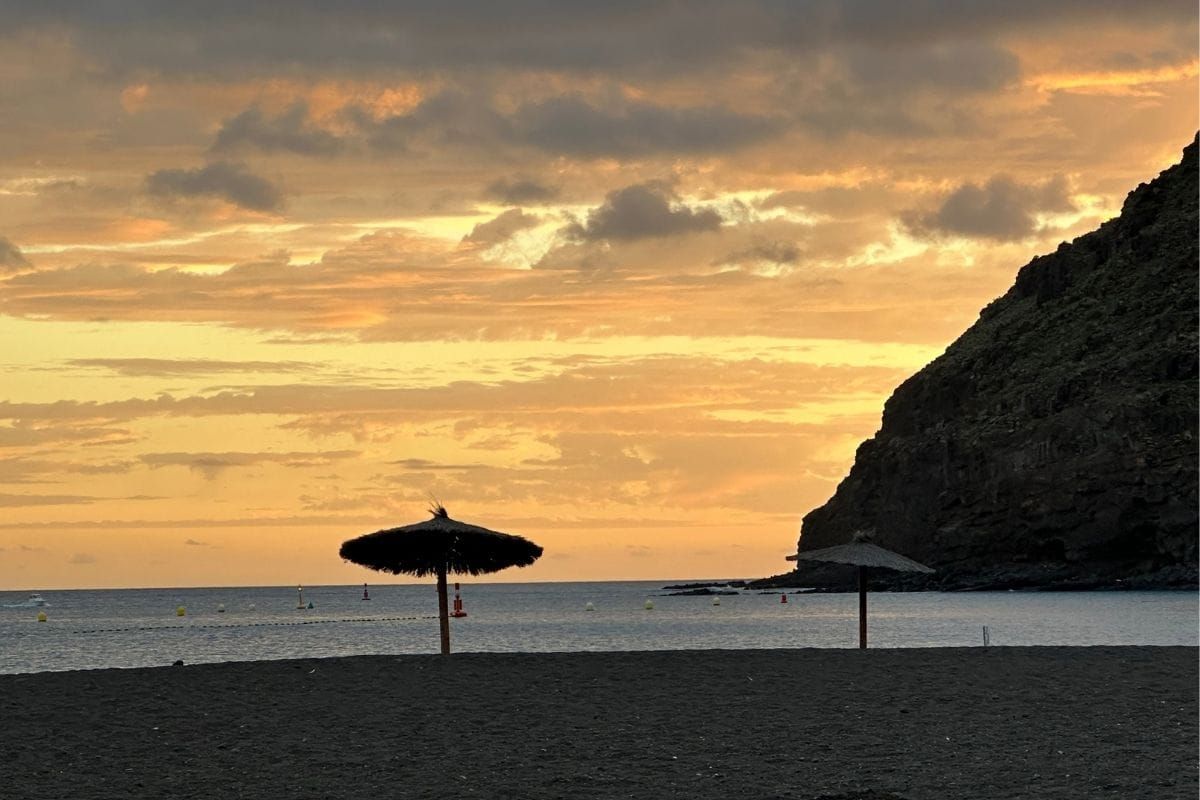
La Gomera's beaches range from sandy harbour bays with lunch a few steps away to stony coves at the bottom of a substantial walk. The useful question is what sort of day you want: a swim, a picnic, a coastal hike or somewhere to watch the light change.
We'd start with the town beaches for a relaxed afternoon and choose the remote bays when the journey is part of the appeal. This guide brings the options together, with short comparisons and links to the individual beach guides.
Choose a beach for your day
- Sand, harbour shelter and food nearby: Vueltas or Playa de San Sebastián.
- A small pool popular with families: Charco del Conde, when the tide and sea conditions suit.
- Beach time followed by lunch: La Calera / La Playa or Playa Santiago.
- A quieter bay with a road approach: Ávalos or Tapahuga.
- A coastal hike with a beach picnic: La Guancha or La Cantera.
- Sunset and an easy evening in town: La Puntilla and the main bay in Valle Gran Rey.
What to expect from La Gomera's beaches
Dark volcanic sand, pebbles and larger stones are the usual mix. Sand cover varies, even along the same bay, so a beach described as sandy can still have a rocky section between your towel and the water.
Harbour beaches such as Vueltas and San Sebastián are more sheltered swimming candidates than the exposed coast. Conditions and beach flags still matter. Playa del Inglés is a place for the scenery rather than swimming, and the northern shore often suits a coastal stop better than a dip.
For a beach holiday with plenty of cafés and easy walks between the shore and your accommodation, Valle Gran Rey is a strong starting point. Playa Santiago has a smaller town setting, while San Sebastián lets you combine beach time with the island's main port and old town.
Valle Gran Rey: harbour shelter, the main bay and sunset
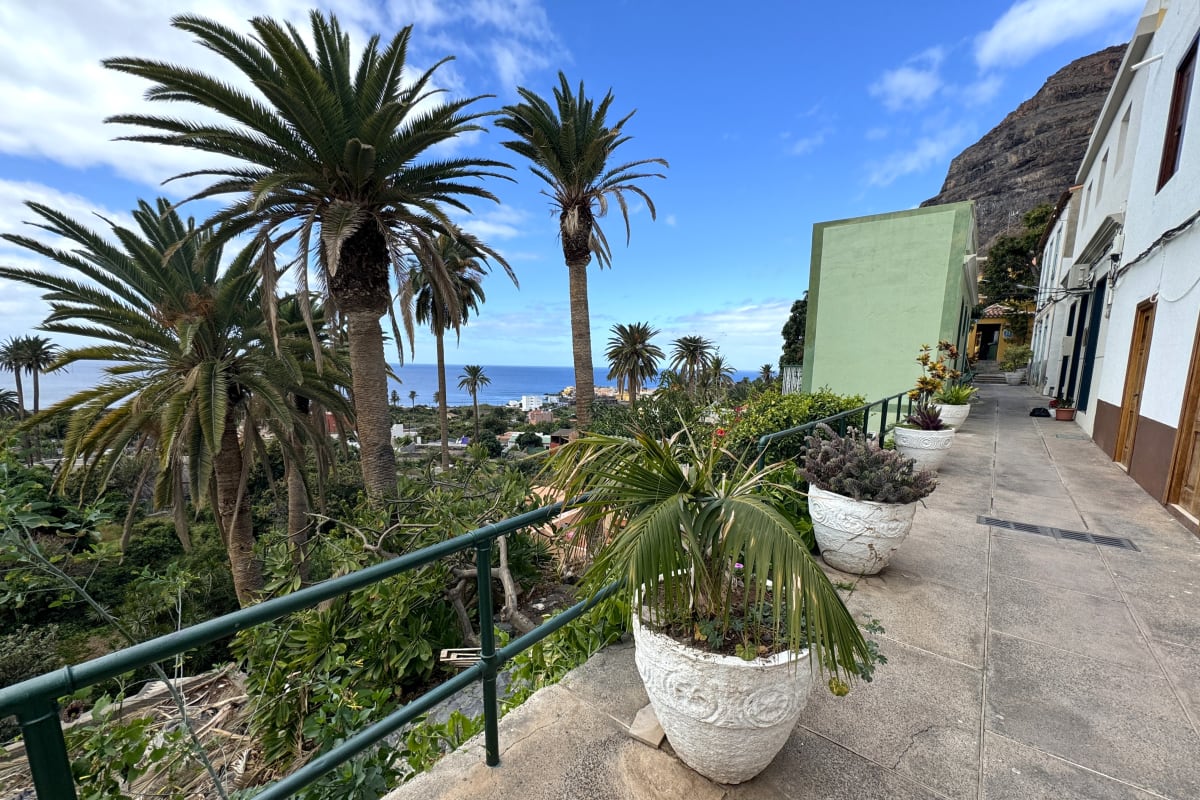
Coastal streets connect the harbour neighbourhood with Charco del Conde, La Puntilla and La Playa. Our Valle Gran Rey beach guide helps you choose between them.
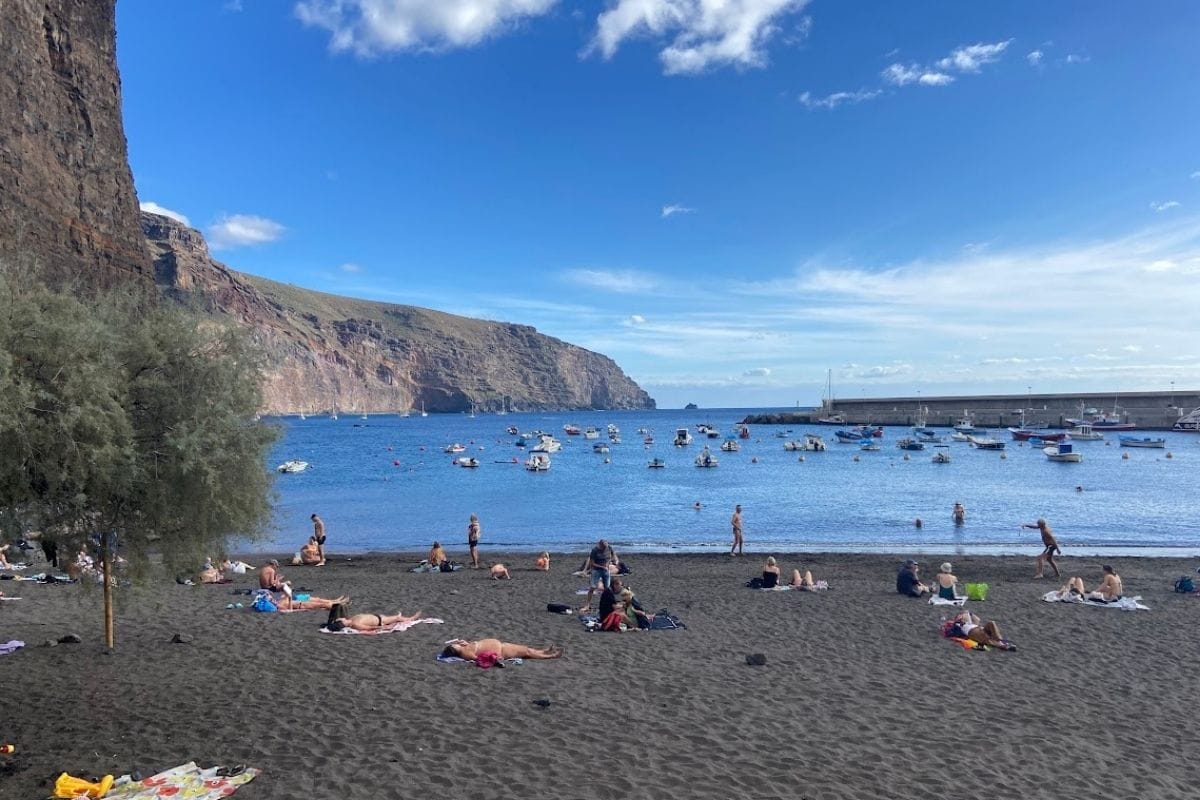
Playa de Vueltas
A sandy beach beside the harbour, with boats in the view and cafés around the surrounding streets. The breakwater offers more shelter than the open bay, making this our starting suggestion for a straightforward family beach afternoon. Vueltas guide.
Charco del Conde
A small rock-fringed pool beside the seafront, with sand and refreshments nearby. It's popular with families, but its depth and exposure change with the tide and swell. Choose it for a compact stop rather than a long swim. Charco del Conde guide.
La Calera / La Playa
The wider northern end of the main bay has dark sand, pebbles and cafés close at hand. The shore becomes narrower and rockier towards La Puntilla. La Calera, La Playa and Playa de Valle Gran Rey are overlapping names here, so we cover them in one main-bay guide.
La Puntilla
The stony section beside the Hautacuperche statue is an easy pause on a waterfront walk. We'd come for the view across the bay and the evening light, then find a table nearby. It is part of the wider main bay, rather than a separate enclosed cove. La Puntilla guide.
Playa del Inglés
Beyond the northern edge of town, Playa del Inglés has sand, rocks and an open Atlantic outlook. It's known for naturism and sunset views. Strong currents make it a dangerous swimming choice, even when the surface looks calm. Playa del Inglés guide.
Playa Santiago: the town beach and quieter eastern bays
Stay on the promenade for cafés and easy access, or head east for less developed shores. The approaches change from town streets to a road, a rougher track and finally a headland path. See our Playa Santiago beach guide.
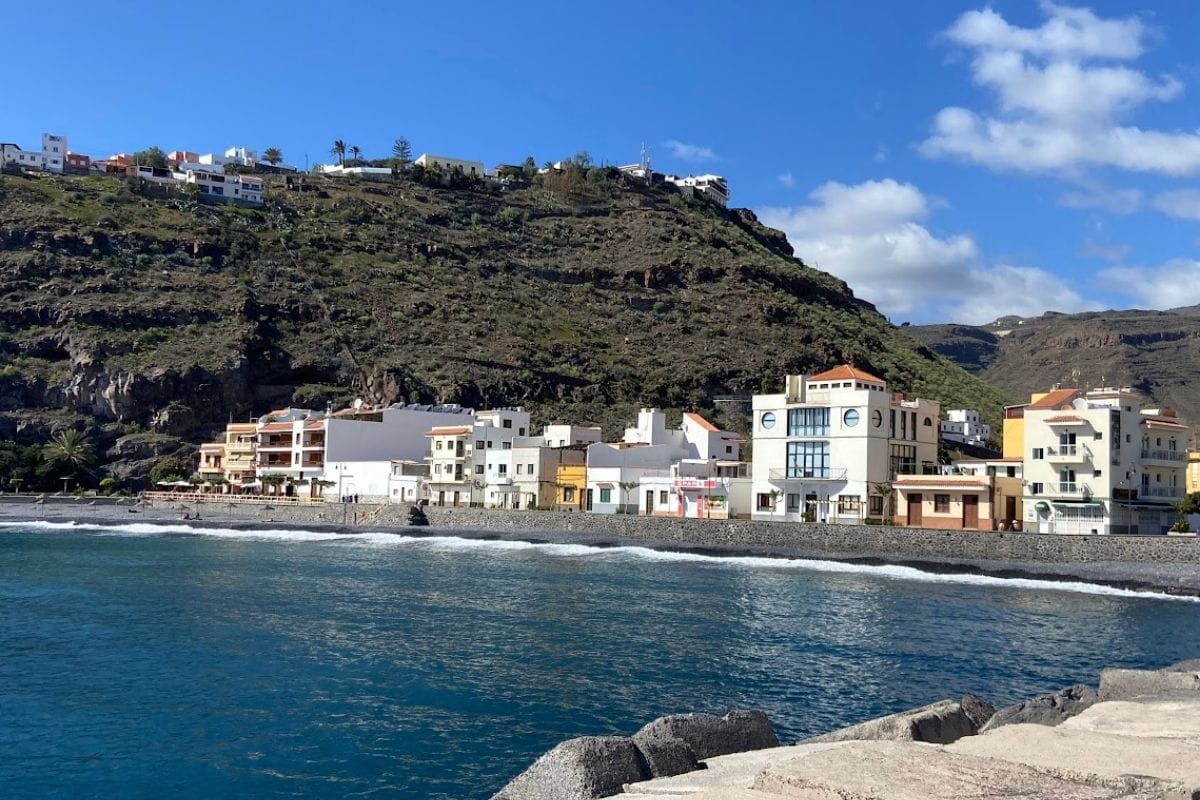
Playa de Santiago
The town beach follows the promenade towards the harbour. It's mostly stony, with more shelter at the western harbour end and plenty of places to eat nearby. Choose it when you want an easy visit without carrying a day's supplies. Playa de Santiago guide.
Tapahuga
The first of the quieter bays east of town, approached by road through the Tecina area. The stony beach sits beneath cliffs, with limited facilities and parking. A picnic makes more sense here than planning around a beach café. Tapahuga guide.
Playa del Medio
An undeveloped bay beyond Tapahuga, with sand and gravel among the stones. The narrow, unpaved final approach needs more consideration than a town beach car park. Naturism is common, and there are no cafés or promenade services. Playa del Medio guide.
Chinguarime
A stony bay beyond Medio, framed by cliffs and rock formations. There is no road to the shore; the land approach goes over the headland on foot. Leave the shoreline cave out of your route plan, as it is not dependable access. Chinguarime guide.
San Sebastián: town beaches and coastal walking destinations
The capital offers two easy town beaches, a road trip north to Ávalos and coastal hikes south to La Guancha and El Cabrito. Our San Sebastián beach guide separates the casual beach stops from the walking days.
Playa de San Sebastián
Dark sand beside the port, with shops and restaurants close by. It's convenient for a swim when conditions suit, a family afternoon or a beach stop between sightseeing and lunch. Expect a working port in the view. San Sebastián beach guide.
Playa de la Cueva
A separate bay just north of the port, still within walking distance of the centre. Cliffs frame a mix of dark sand and stones, with views towards Tenerife in clear weather. Choose it for a more enclosed coastal setting near town. La Cueva guide.
Playa de Ávalos
Also called Ávalo, this pebble beach lies north of San Sebastián, with a gravel approach and no public beach facilities. Bring a picnic and enjoy the quiet bay; the final track is the main practical difference from the town beaches. Ávalos guide.
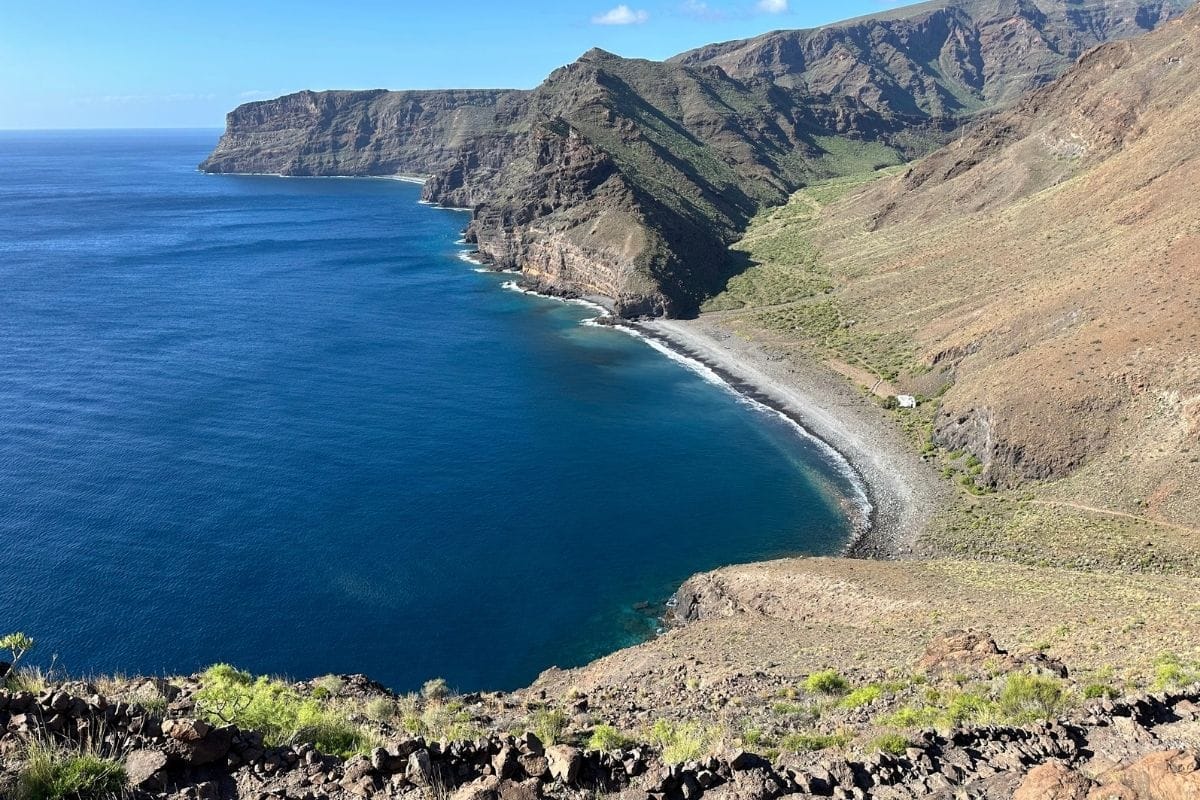
Playa de la Guancha
A coastal hike south from San Sebastián leads to this broad stony bay. Our return walk was about 9 km, with steep sections and no beach services at the end. Come for the walk and bring a picnic. La Guancha guide.
Playa del Cabrito
Farther south, El Cabrito makes a longer outing: about 7 km and two and a half hours each way from San Sebastián, according to the hotel's arrival guide. There is no road, and the hotel's guest boat transfers are not a public beach ferry. El Cabrito guide.
The north and northwest: coastal scenery and picnic stops
These beaches work well as part of a day exploring the valleys and villages. The Atlantic is a larger part of the experience here, so choose them for their setting rather than assuming a swim will be on the itinerary.
La Caleta, Hermigua
A black-sand cove in the municipality of Hermigua, with a road approach and more picnic-day facilities than many remote beaches. The official La Caleta listing includes parking, showers, toilets and a picnic area, but also flags strong waves and no lifeguard.
Playa de Santa Catalina
The broad stony shore at the foot of the Hermigua valley is a good place to appreciate the coast and surrounding slopes. Strong surf often makes swimming unsuitable. The nearby Pescante de Hermigua is listed as closed for safety reasons, so its pool is not an alternative swimming recommendation. Santa Catalina guide.
Playa de Vallehermoso
About 3 km from Vallehermoso town, this beach mixes dark sand and rounded stones. The adjoining maritime park has seasonal swimming pools, separate from the exposed sea. The official beach listing flags strong waves; don't build a winter outing around the summer pool facilities.
Playa de Alojera
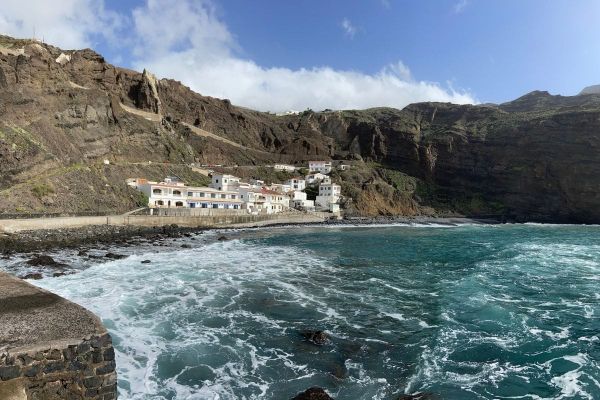
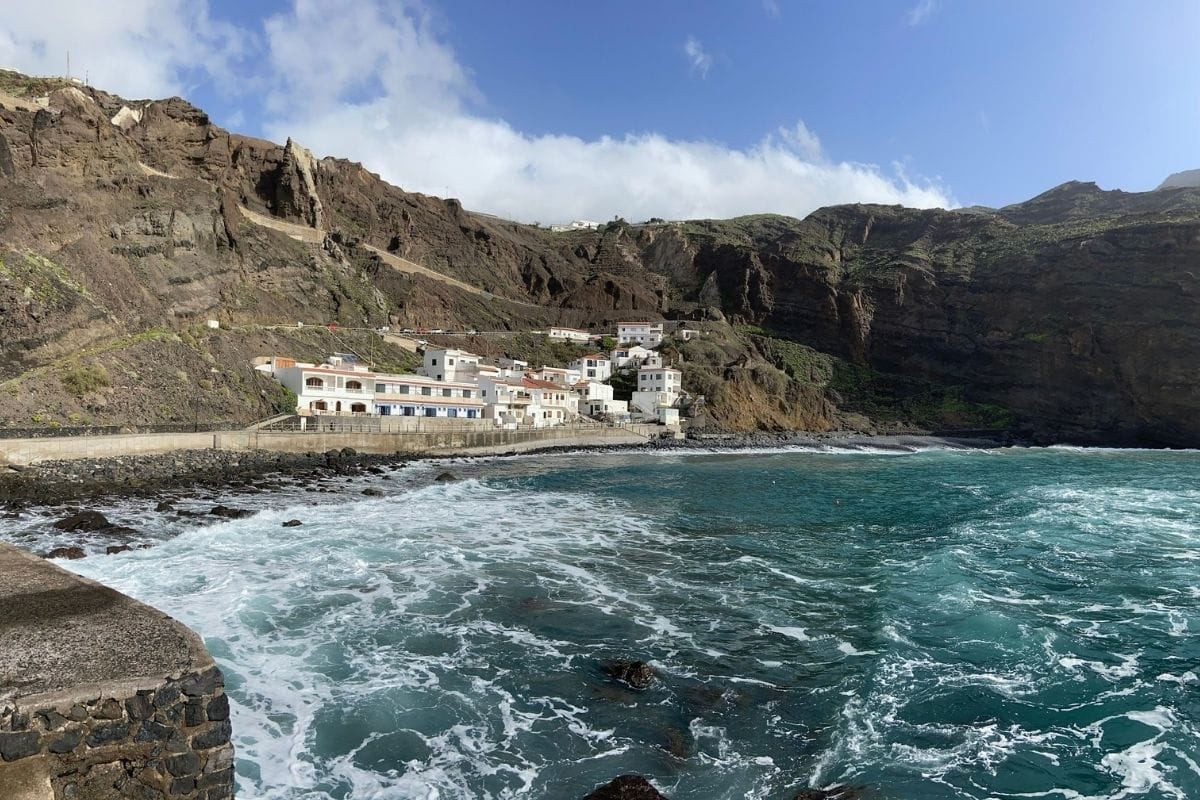
A winding descent brings you to this small coastal settlement, with cliffs and waterfront buildings around the bay. We'd choose it for the setting, a meal by the sea and time watching the waves. Even its small seawater pool is unsuitable when waves wash over it. Alojera guide.
The quieter southern bays
Some southern bays have winding road approaches; others require a hike or an arranged boat visit. Nearby on a map can still mean a considerable journey across La Gomera's ravines.
Playa de la Rajita
Below La Dama, Rajita has a winding road to a stony bay dominated by old fish-cannery buildings. Choose it for the combination of coastal scenery and industrial history. The derelict structures are part of the view, not buildings to explore. La Rajita guide.
Playa de Iguala
A quieter walking destination from the La Dama area, with a descent to a stony bay and the climb back afterwards. The tourism authority describes roughly an hour for the outward walk. The private-property track is not a public driving route to the beach. Iguala guide.
Playa de la Negra
A remote cove below the Arguayoda area, with dark sand, gravel and stones. We visited by boat and haven't tested the walking approach ourselves, so our guide doesn't promise an easy descent or a reliable walking time. There are no beach facilities. La Negra guide.
Playa de la Cantera
High cliffs and an old cannery give this stony south-coast bay its character. There is no road to the shore. A recorded route from near Quise is about 6.6 km return with roughly 500 m of climbing, so the beach picnic comes with a substantial uphill return. La Cantera guide.
Argaga: currently outside the beach-day shortlist
Playa de Argaga, beyond Vueltas, is currently listed by the tourism authority as inaccessible on foot or by car because of landslides. It is not an extension to the Valle Gran Rey waterfront walk. Our earlier article misidentified Argaga as Las Arenas; those are separate beaches.
See the beaches before you choose
Our Happy Backpack La Gomera playlist includes visits to many of these beaches. The three area guides above also include our longer waterfront walks, which help show how the beaches fit around the towns.
For a first beach day, we'd keep the journey short and choose somewhere with lunch nearby. Save the remote bay for a day when you want the walk as well. Our La Gomera weather guide explains how conditions differ around the island.
Frequently asked questions
Does La Gomera have sandy beaches?
Yes. Vueltas, San Sebastián and parts of La Calera have dark volcanic sand. Many other beaches mix sand with pebbles and larger stones, and the amount of sand can change with sea conditions.
Which beaches would you consider for swimming?
The more sheltered harbour settings at Vueltas and San Sebastián are useful starting points. Swimming still depends on conditions and beach flags. Playa del Inglés is a scenery and sunset destination, not a swimming recommendation.
Where would you stay for easy access to several beaches?
Valle Gran Rey has several beach areas linked by coastal streets, with cafés and accommodation nearby. Playa Santiago and San Sebastián also offer convenient town beaches, with quieter options beyond their centres.
Do you need a car for La Gomera's beaches?
You can reach the central beaches on foot when staying in Valle Gran Rey, San Sebastián or Playa Santiago. A car helps with more distant road-access beaches, but it doesn't remove the walking approaches to places such as La Guancha, Chinguarime and La Cantera.