Alojera, La Gomera: Palm Honey, Village Life and a Seafront Stay
Visit Alojera for palm honey, village lanes and the west coast. Our guide includes a walking video, our seafront stay, accommodation and bus details.

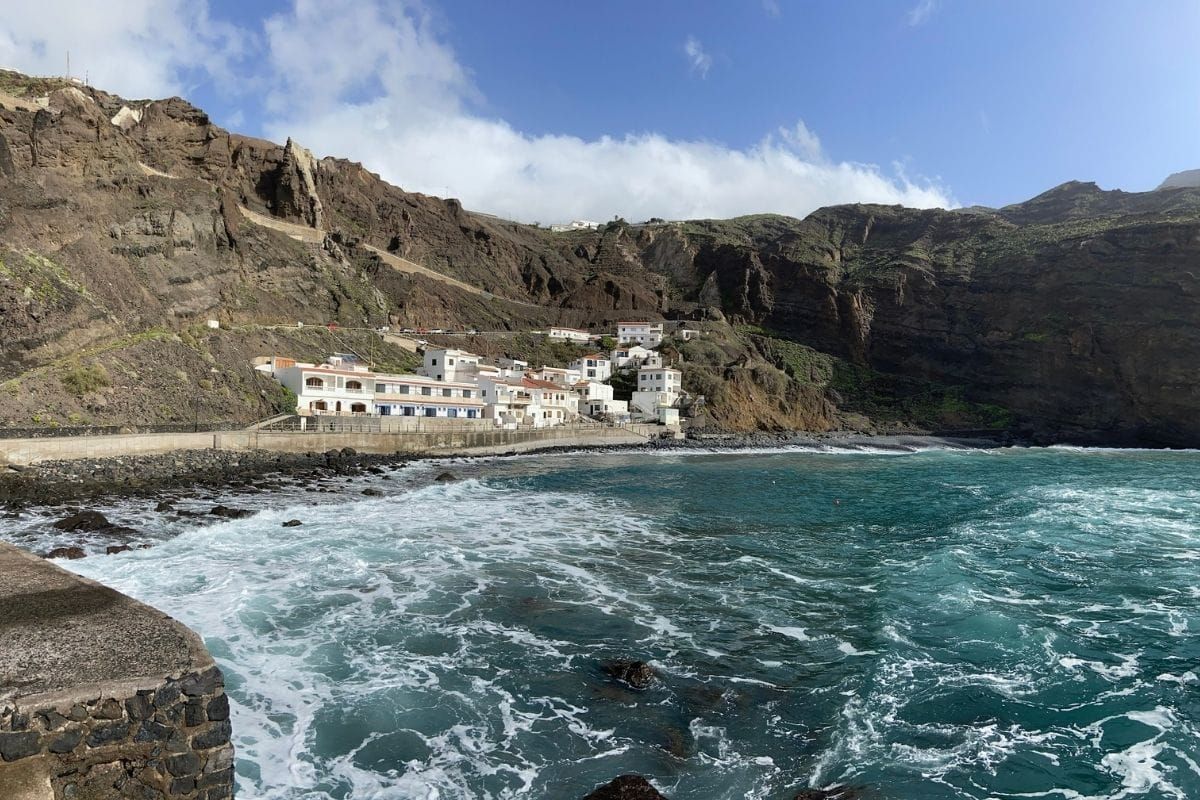
On rough days in Alojera, the sea spray reached our apartment balcony. Being above the water did not always mean being out of reach. We still enjoyed our few days there: watching the sea became part of the day, whatever it was doing.
That was down at Playa de Alojera. Higher up, the village spreads among palms, terraces and winding lanes. The coast and the village belong to the same visit, but where you stay makes a real difference to it.
What brings people to Alojera?
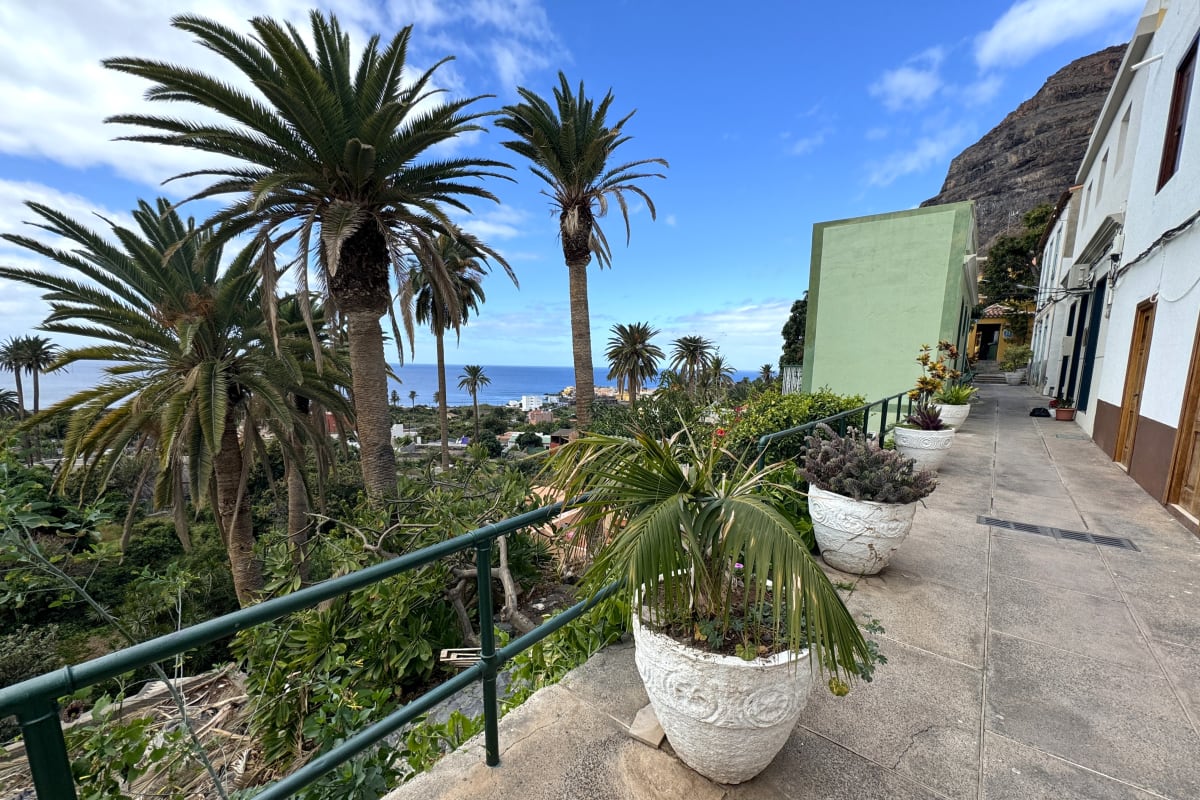
Alojera lies on La Gomera's western side, in the municipality of Vallehermoso. It is known for palm honey, or miel de palma, and the palms are more than scenery here. They are part of a local industry with a long history.
This is a good place for a village walk, a visit to the palm honey centre and time by the sea. Allow half a day for that combination by car. Staying a few nights gives you time to enjoy the coast without immediately having to climb back up the winding road.
It is less convenient as a base for racing around the whole island. Every outing begins with that climb inland. We would choose Alojera for a quieter stay with some days close to home, rather than for the shortest driving times.
Our walk through the village
The Happy Backpack video follows Alojera's lanes among the palms and cultivated slopes. It shows the village above the shore, so you can see how different this setting is from the little seafront settlement.
Casa de la Miel de Palma
The Casa de la Miel de Palma explains the relationship between the island's people and the Canary Island palm. The displays cover palm syrup production and the many uses people found for the tree, from its leaves to its sap.
Despite the English name, palm honey is a syrup made from palm sap, rather than honey made by bees. Knowing that makes the bottles in village shops and the sweet drizzle on your dessert much less mysterious.
The centre is at Caserío Aldama, 80. The island museum directory currently lists Wednesday to Saturday, 10 am to 5:30 pm, with last admission at 5 pm. Visit before your village walk and those palms become part of a story, rather than just the view.
Our guide to La Gomera's food has more on palm honey and the dishes you will encounter elsewhere on the island.
Walking around Alojera
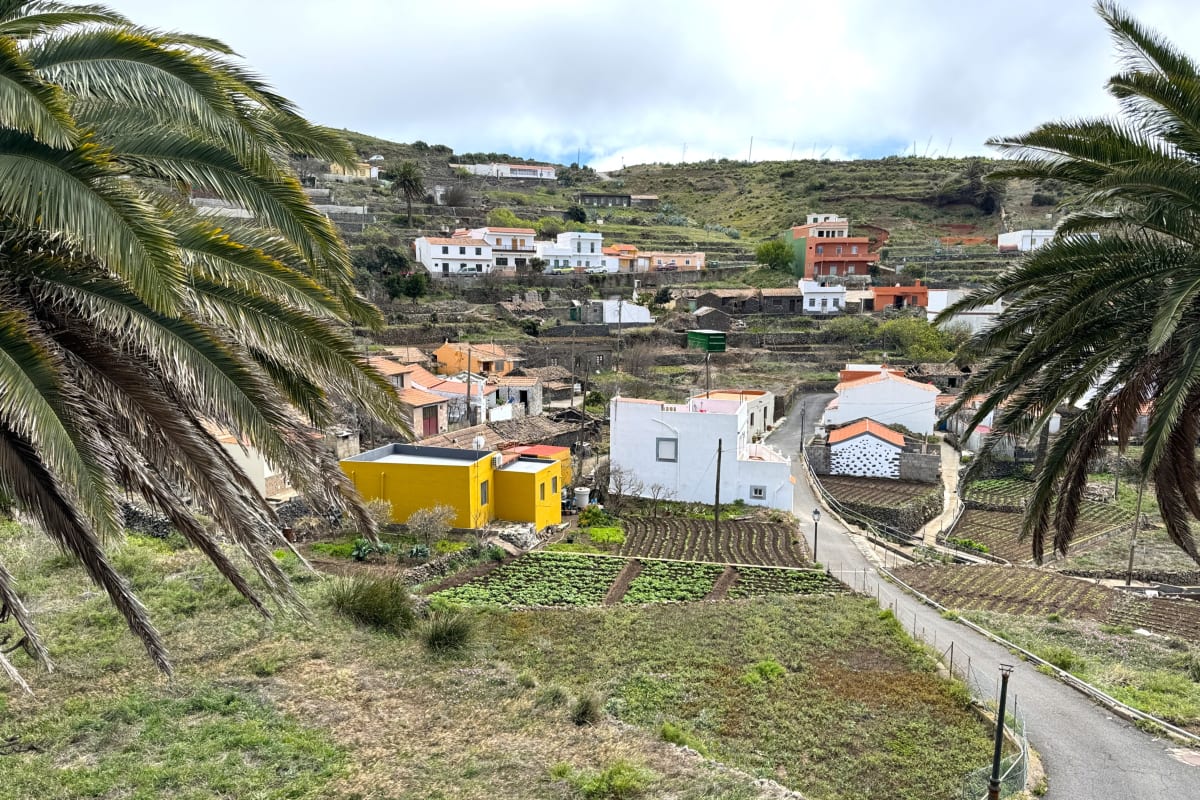
Leave time to wander beyond the museum. Houses are scattered across the slopes, with cultivated plots and palms between them. It is a village to explore in small stretches rather than a compact old town with everything gathered around one square.
The houses sit at different levels, with steep, winding roads between them and the shore. For a beach stay, look down at Playa de Alojera; for palms and village lanes, choose higher in the valley.
Down at Playa de Alojera
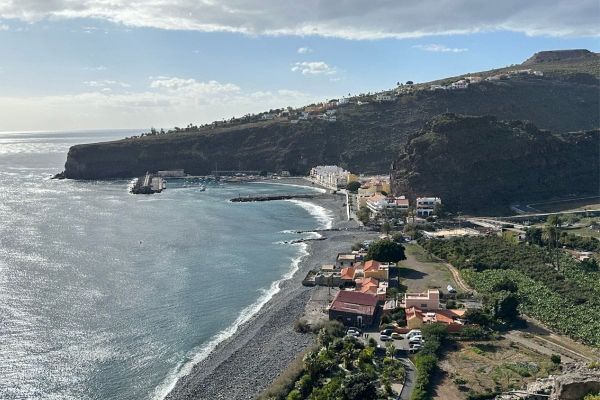
The road eventually reaches a small group of buildings beside the sea. This is where we stayed, and the view from the apartment was a large part of the appeal. On a quiet day you can sit and watch the water; on a rough one, it makes sure you notice it.
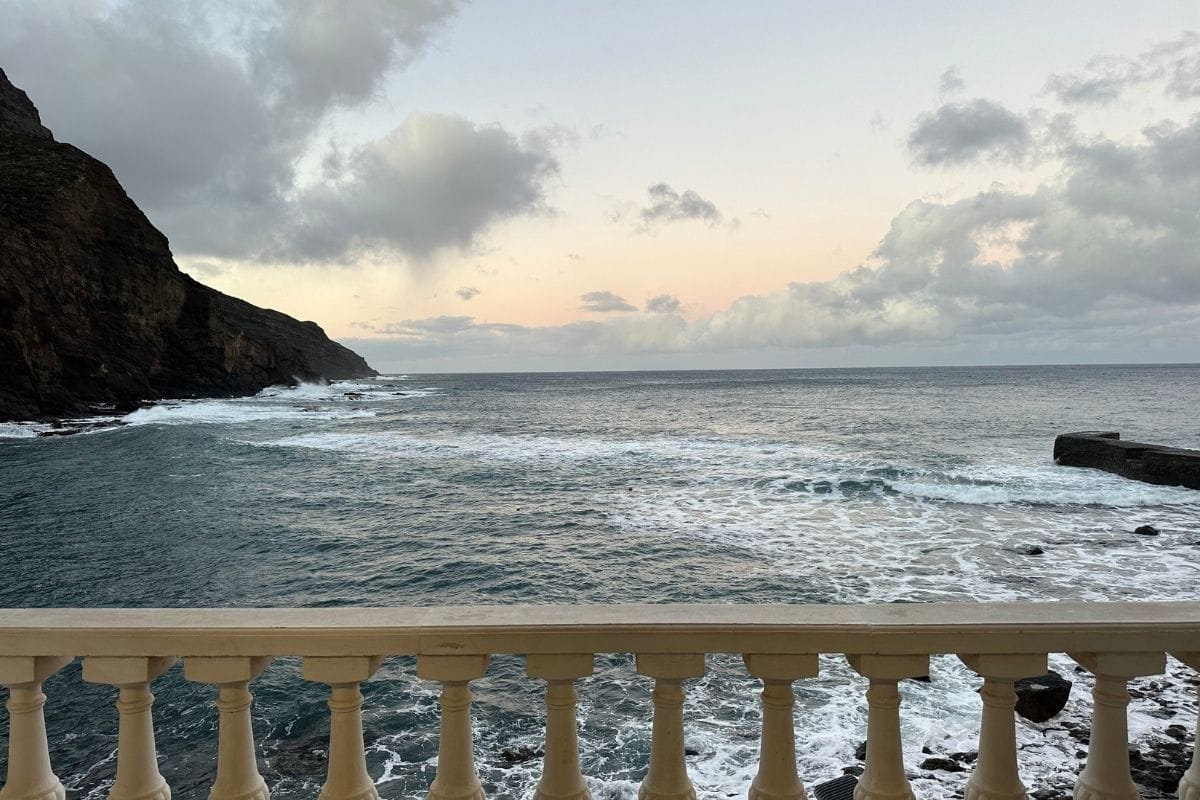
There is a beach and a saltwater pool, but this is an exposed coast. A stay beside the sea doesn't guarantee days swimming in it. Our Playa de Alojera guide covers the shore, conditions and parking in more detail.
Restaurante Prisma is the seafront restaurant to look for. For a longer self-catering stay, bringing the main food shop with you makes life easier than building every day around eating out.
Where to stay in Alojera
Decide first between the coast and the upper village. The waterfront gives you the sound and view of the sea, while a house higher up puts you among the palms and closer to the village. Neither is simply a different postcode for the same experience.
Casas Ossorio lists several local rentals, including Casa Rural Tía Rita, a two-bedroom house in the valley, and Galeón Ossorio, a smaller place for two near the village square. These are options to compare, not the apartment we stayed in.
For a rental higher in the village, the terrace view and access from parking are useful details to compare. Down at the coast, the sea is the main attraction - and, as we found, sometimes the loudest neighbour.
Getting here and exploring nearby
The approach by car comes down from the Epina area. It is a winding descent, so allow time to enjoy it rather than treating the map distance as a journey time.
GuaguaGomera Line 5 connects Vallehermoso and Alojera, including the Casa La Miel stop. The published service runs Monday to Friday only, with no service on Saturdays, Sundays or public holidays. Its limited timetable makes a car the more flexible choice for a short sightseeing visit.
On the way inland, the Chorros de Epina springs offer a short wooded walk. You can also continue to Vallehermoso for the town, shops and views of Roque Cano.
For us, Alojera's appeal is the combination: palms and village life above, the Atlantic below. A day visit shows you both. A few nights let you find out just how much time you are happy to spend watching waves. In our case, quite a lot.