Playa Santiago Beaches: The Town Beach and Three Quiet Bays
Stay by the promenade or head east to Tapahuga, Playa del Medio and Chinguarime. Here's how the four beach options compare.

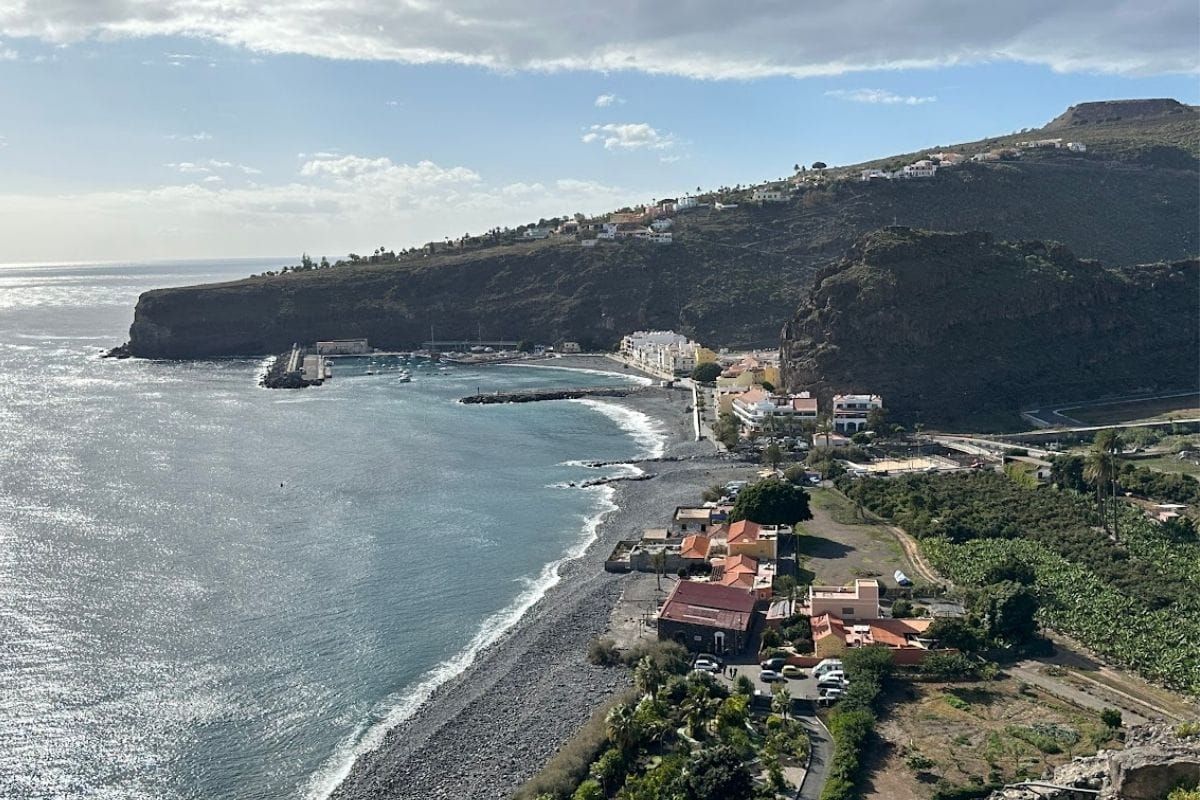
Playa Santiago gives you a simple choice: stay beside the promenade for cafés and easy access, or head east towards three quieter bays. Tapahuga, Playa del Medio and Chinguarime trade town facilities for stony shores and a more open coastal setting.
We'd choose the town beach for an unhurried afternoon with lunch nearby. The other bays suit a picnic or a walk, with the amount of effort increasing as you go farther east.
Choose your beach
- An easy beach afternoon with food nearby: Playa de Santiago.
- A quieter stony bay with a road approach: Tapahuga.
- An undeveloped beach beyond a rougher track: Playa del Medio.
- A more secluded bay reached on foot: Chinguarime.
The order east from town is Tapahuga, Medio, then Chinguarime. They are near Playa Santiago geographically, even where municipal boundaries differ. Don't mistake a short distance along the coast for a continuous beachfront drive.
Playa de Santiago: promenade, harbour and lunch
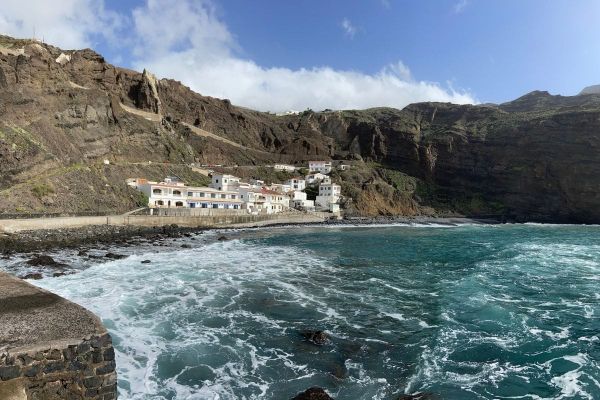
The main beach runs along the town waterfront, with a long, mostly stony shore and a promenade above it. The western end, near the harbour, has more protection from harbour structures than the open stretch farther east.
This is the convenient option: cafés and restaurants overlook the water, shops are nearby, and you can combine time at the beach with a stroll around the harbour. The stones make footwear useful, and swimming depends on the day's sea conditions.
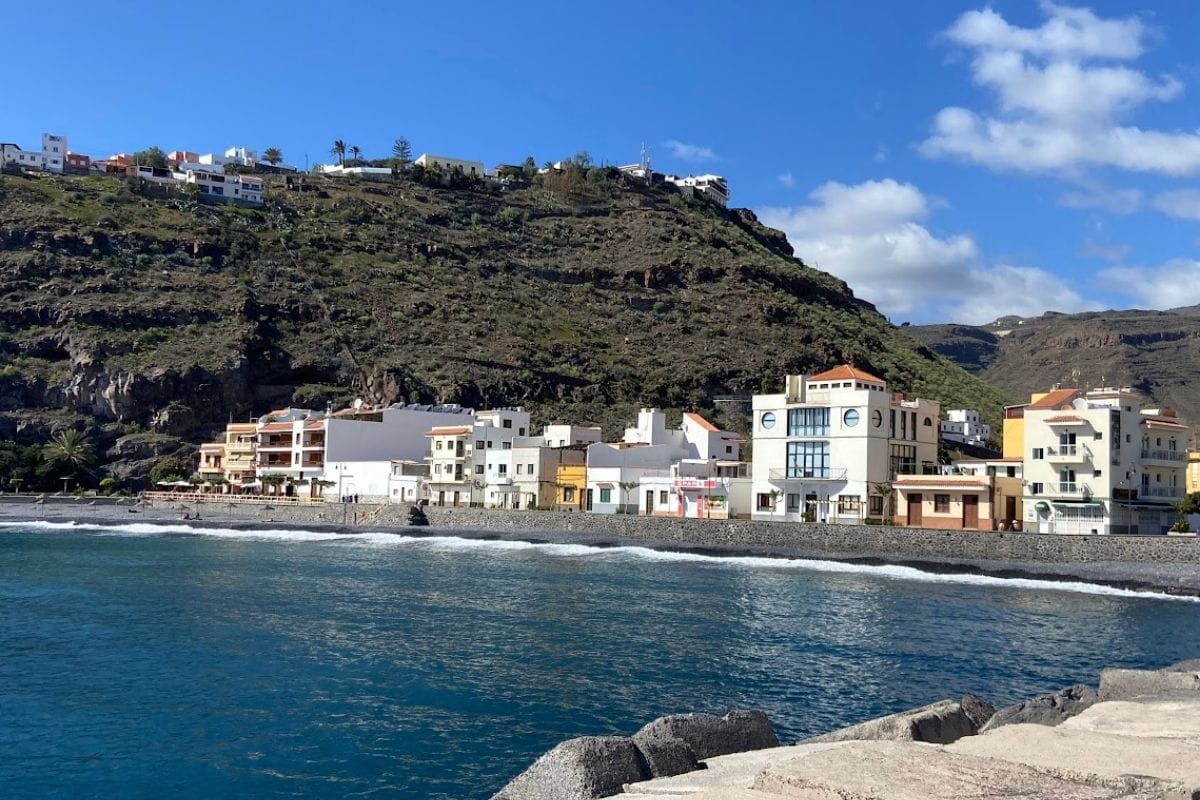
If you want the beach to fit around the rest of your day, start here. Read our Playa de Santiago guide.
Tapahuga: the first quiet bay east of town
Tapahuga is reached by road via the Tecina area. The bay feels separate from the town, with a steep stony shore, cliffs and a few old structures behind the beach.
It's the easiest of the three eastern bays to approach by road, although parking space and facilities are limited. We would bring a picnic rather than plan around finding a beach café. The beach is appealing for its setting, but the stones and waves can make entering the sea awkward.
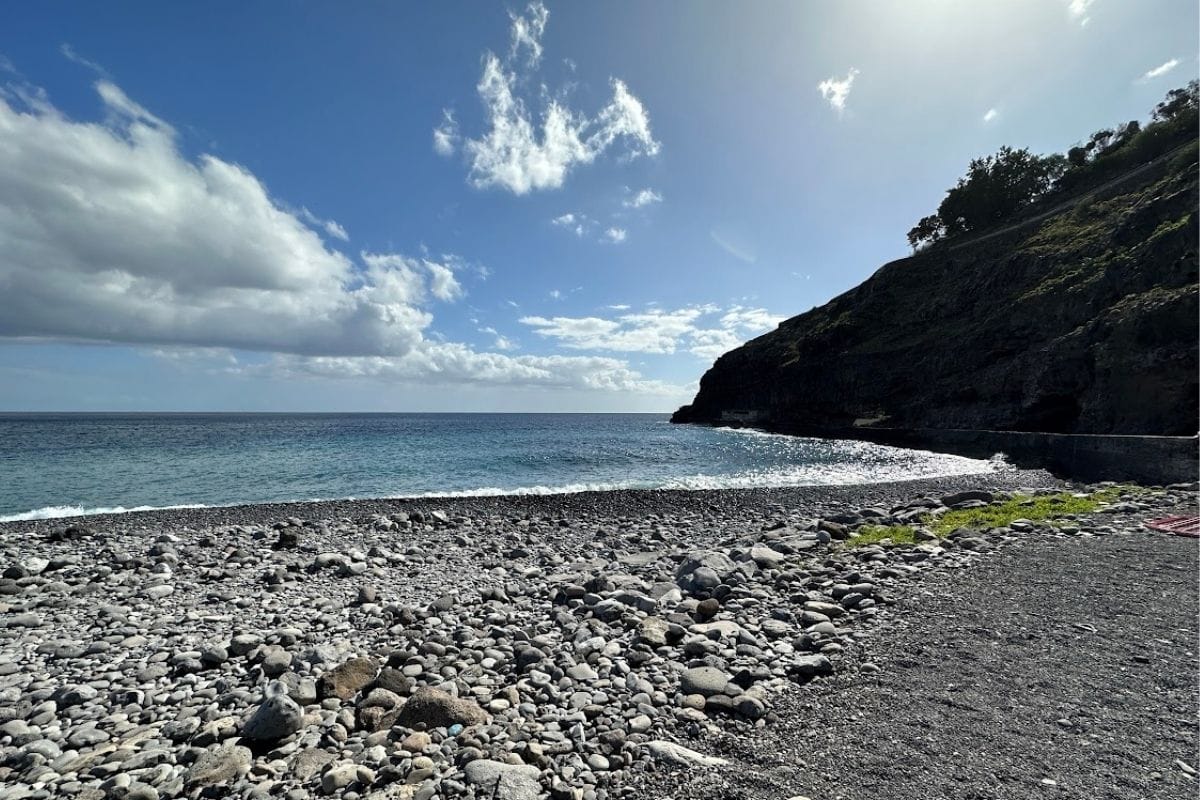
Choose Tapahuga when you want a quiet coastal stop without adding Chinguarime's walking approach. Read our Tapahuga guide.
Playa del Medio: an undeveloped bay beyond the track
Medio lies beyond Tapahuga, with dark sand and gravel among the stones and cliffs around the bay. There are no waterfront cafés or promenade, which is much of its appeal.
The approach includes a narrow, unpaved track. Its condition matters more than the short distance on the map; reaching the vicinity by car doesn't mean every vehicle will suit the final section. Our detailed guide describes the approach we used.
Naturism is common at this stretch of coast. Bring your own food and water, and choose Medio for a quieter stay by the sea rather than a serviced beach day. Read our Playa del Medio guide.
Chinguarime: the bay reached on foot
Chinguarime is the next bay east of Medio. Cliffs, rock formations and a broad stony shore give it a more isolated feel, with no road or beach facilities.
The land approach from Medio goes over the headland on a steep footpath. Wear walking shoes and carry what you need for the return. The shoreline cave is not a dependable access route, so don't plan the visit around passing through it at low tide.
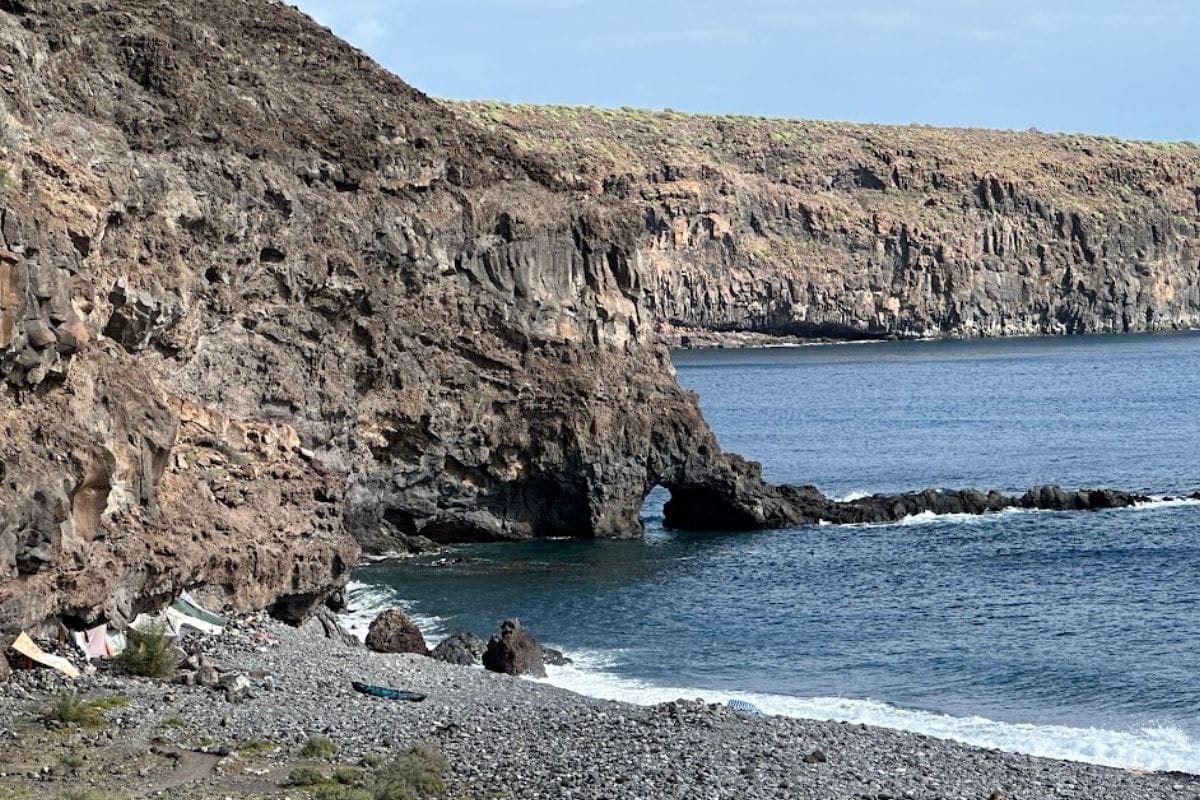
Choose it if the walk and the quieter setting are part of the attraction. Naturism is common here too. Read our Chinguarime guide.
Watch our Playa Santiago walk
Our Happy Backpack video explores the harbour, beach and village. It shows the town setting; the three eastern bays have a much less developed feel.
Making the choice
For most visitors, one beach is enough for the afternoon. Stay in town if you want a meal and a straightforward journey home, choose Tapahuga or Medio for a picnic, and leave time for the headland walk if Chinguarime is your aim.
The three quieter bays offer fewer services and more exposed shores than the harbour end of town. That difference matters more than a numbered ranking. Compare the wider island in our La Gomera beach guide.
Frequently asked questions
Are the quieter beaches north or east of Playa Santiago?
They lie east of the town along the coast: Tapahuga first, then Playa del Medio and Chinguarime.
Can you drive to all four beaches?
The town beach has straightforward road access. Tapahuga has a road approach, while Medio's final track is rougher. Chinguarime has no road to the shore and requires a walking approach or separately arranged boat access.
Which beach would you choose for an easy afternoon?
The main town beach is the simplest choice, with the promenade, cafés and shops nearby. The western harbour end has more shelter than the open shoreline.
Are these naturist beaches?
Naturism is common at the quieter bays east of town, especially Medio and Chinguarime. They are mixed-use beaches, so you may see both clothed and unclothed visitors.