Valle Gran Rey Beaches: Which One Should You Visit?
Choose between Vueltas' harbour beach, Charco del Conde's small pool, the main bay and the open coast at Playa del Inglés.

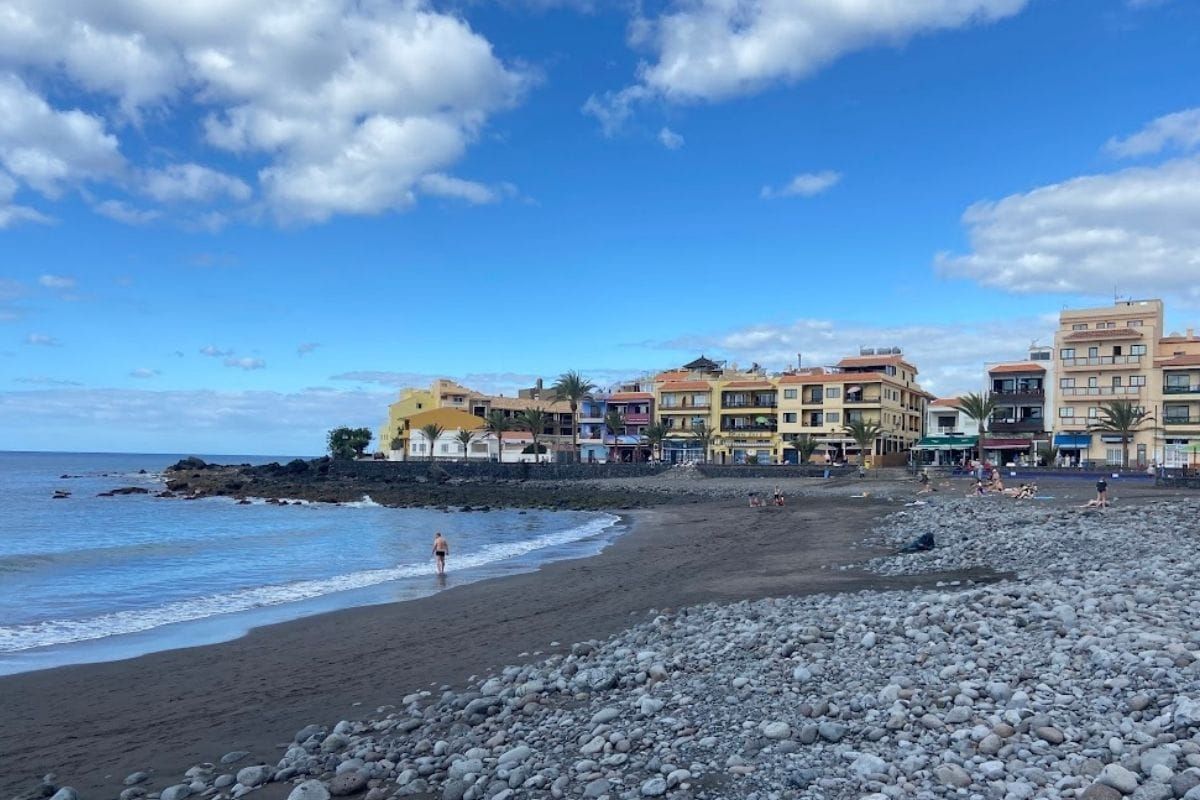
Valle Gran Rey makes a beach day easy: you can walk between a sandy harbour beach, a small rock-fringed pool and the long main bay, with cafés along the way. The choice is less about finding one 'best' beach and more about what you want from the afternoon.
We'd start with Vueltas for sand and harbour shelter, La Calera for a beach-and-lunch combination, or La Puntilla for an evening stroll. Playa del Inglés has the wilder setting, but it belongs on your sunset list rather than your swimming list.
Choose your beach
- Sand and harbour shelter: Playa de Vueltas.
- A small pool popular with families: Charco del Conde.
- The main beach with cafés close by: La Calera / La Playa.
- A waterfront pause and sunset views: La Puntilla.
- Open coast, naturism and evening light: Playa del Inglés.
La Calera, La Playa and Playa de Valle Gran Rey are overlapping names along the main bay, so we cover them together. La Puntilla is the recognisable southern section beside the Hautacuperche statue, rather than another enclosed bay.
Playa de Vueltas: sand beside the harbour
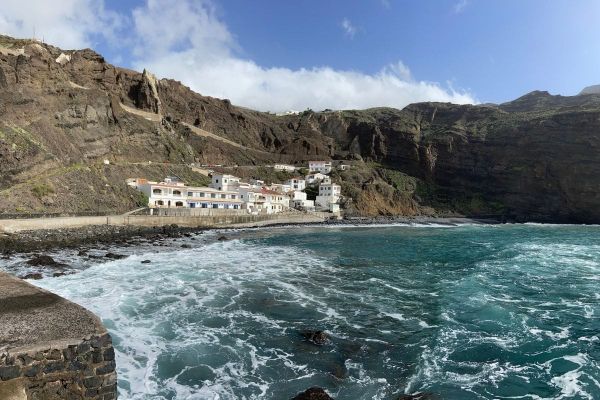
Vueltas is our first suggestion for a straightforward beach afternoon. There's dark sand, the harbour walls offer shelter from the open sea, and the fishing boats and cliffs give you something to watch between swims.
The shops and restaurants of the harbour neighbourhood are a short walk away, and beach showers are listed in the official guide. It's a convenient choice with children, although there is no lifeguard and bathers need to stay clear of boat activity.
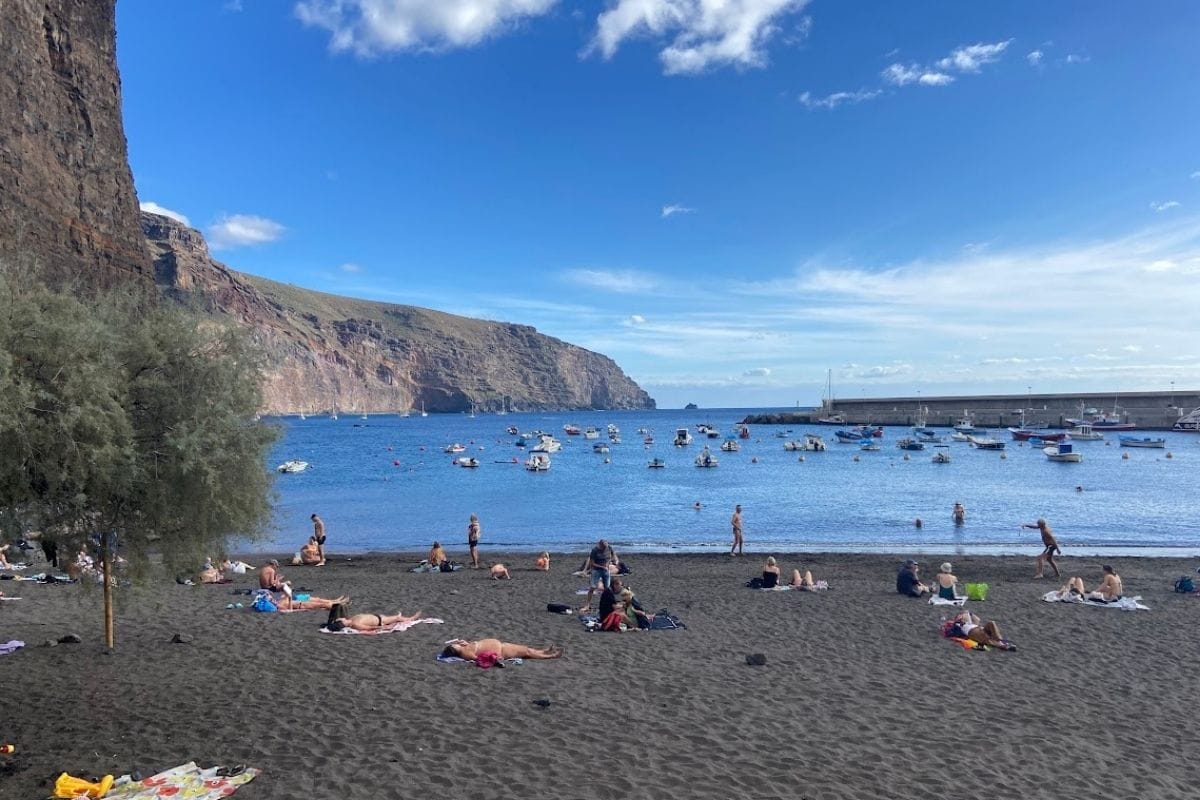
Choose Vueltas when you want a beach, lunch and a walk around the port without much organising. Read our Vueltas beach guide.
Charco del Conde: a small pool by the seafront
Charco del Conde is a much smaller setting, with a rock barrier enclosing a shallow pool and sand beside the promenade. It suits families who want a compact place to spend time by the water, with refreshments nearby.
The amount of water changes with the tide, and waves can wash over the rocks when the sea is rough. Its sheltered shape doesn't make it an all-weather paddling pool; the tide and conditions determine how inviting it is.
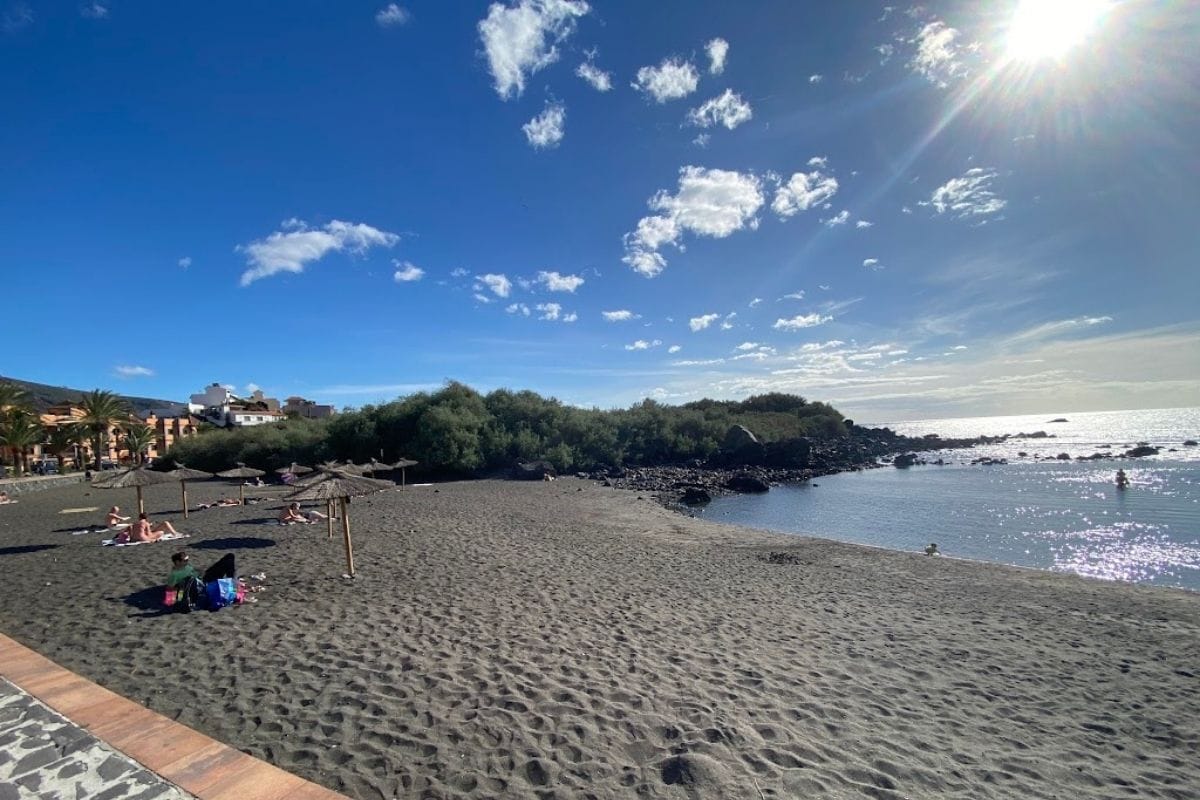
If your idea of a beach day involves long swims, Vueltas gives you more room. For a small sandy stop on a waterfront walk, Charco del Conde is an easy choice. Read our Charco del Conde guide.
La Calera / La Playa: the main bay
The main bay runs south from the wider beach at La Calera towards La Puntilla. The northern end has more dark sand and a choice of cafés and restaurants, while the shore becomes narrower and rockier farther along.
This is the place we'd choose to settle in for a few hours with lunch close at hand. It also makes a pleasant seafront walk if you prefer to keep moving. Unlike Vueltas, the bay faces the open sea, so surf has more influence on swimming.
You don't need separate trips to La Calera, La Playa and Playa de Valle Gran Rey: those names overlap on the same stretch of coast. Our combined La Calera and La Playa guide explains the shoreline and the neighbourhoods.
La Puntilla: a pause beside the statue
The Hautacuperche statue marks La Puntilla at the southern end of the main bay. The section we visited was notably stony and quieter than the sandier beach farther north.
We'd choose it for the view across the bay, an evening photograph or a drink at one of the nearby cafés. It's a natural stopping point when walking between La Playa and Charco del Conde, rather than somewhere that needs a full-day plan. Read our La Puntilla guide.
Playa del Inglés: open coast and sunset
Beyond the northern end of the built-up waterfront, Playa del Inglés has a more open Atlantic setting. Sand, rocks and the headland replace the promenade, and the beach has a long association with naturism.
Come for the coast and the evening light. Strong currents make this a dangerous swimming beach, including when the surface looks calm. There are no beach services, so buy a drink or picnic before leaving the town streets. Read our Playa del Inglés guide.
Argaga: an access restriction, not another beach stop
Playa de Argaga lies beyond Vueltas. The island tourism authority currently lists it as inaccessible on foot or by car because of landslides. Leave it out of a waterfront walk; older directions around the cliff are not a usable alternative.
Our earlier coverage mistakenly labelled this beach Las Arenas. Argaga and Las Arenas are different places, and the corrected guide now uses Argaga's name.
Watch our Valle Gran Rey waterfront walk
Our Happy Backpack video follows the harbour and beach areas. It's a useful way to see how the built-up waterfront connects before choosing where to spend your time.
An easy way to spend the day
Start around Vueltas, then follow the coastal streets north past Charco del Conde and La Puntilla towards La Playa. Choose a beach as you go, with lunch at the harbour or the northern end of the main bay. There's no need to turn a day beside the sea into a five-stop checklist.
For an evening outing, we'd keep things simple: La Puntilla or the main bay, followed by dinner nearby. Our La Gomera beach guide compares these with the rest of the island.
Frequently asked questions
Which Valle Gran Rey beach would you choose with children?
Vueltas is a practical starting point because it has sand, harbour shelter and food close by. Charco del Conde offers a smaller pool when the tide and sea conditions suit. Neither should be treated as a supervised swimming pool.
Are La Calera and La Playa separate beaches?
The names overlap along the main bay. We cover the wider northern beach and the shoreline towards La Puntilla in one guide, rather than counting them as separate destinations.
Can you walk between the beaches?
Coastal streets connect Vueltas, Charco del Conde, La Puntilla and La Playa. Playa del Inglés is beyond the northern end of town. Argaga is excluded because of the landslide access restriction.
Where would you go for sunset?
La Puntilla and the main bay are convenient choices with cafés nearby. Playa del Inglés offers a more open coastal setting, reached on foot from the edge of town.