Hermigua, La Gomera: Visiting and Staying in the Valley
Plan a visit to Hermigua with advice on its valley, Los Telares, coastal views, places to eat, where to stay and bus connections around northern La Gomera.

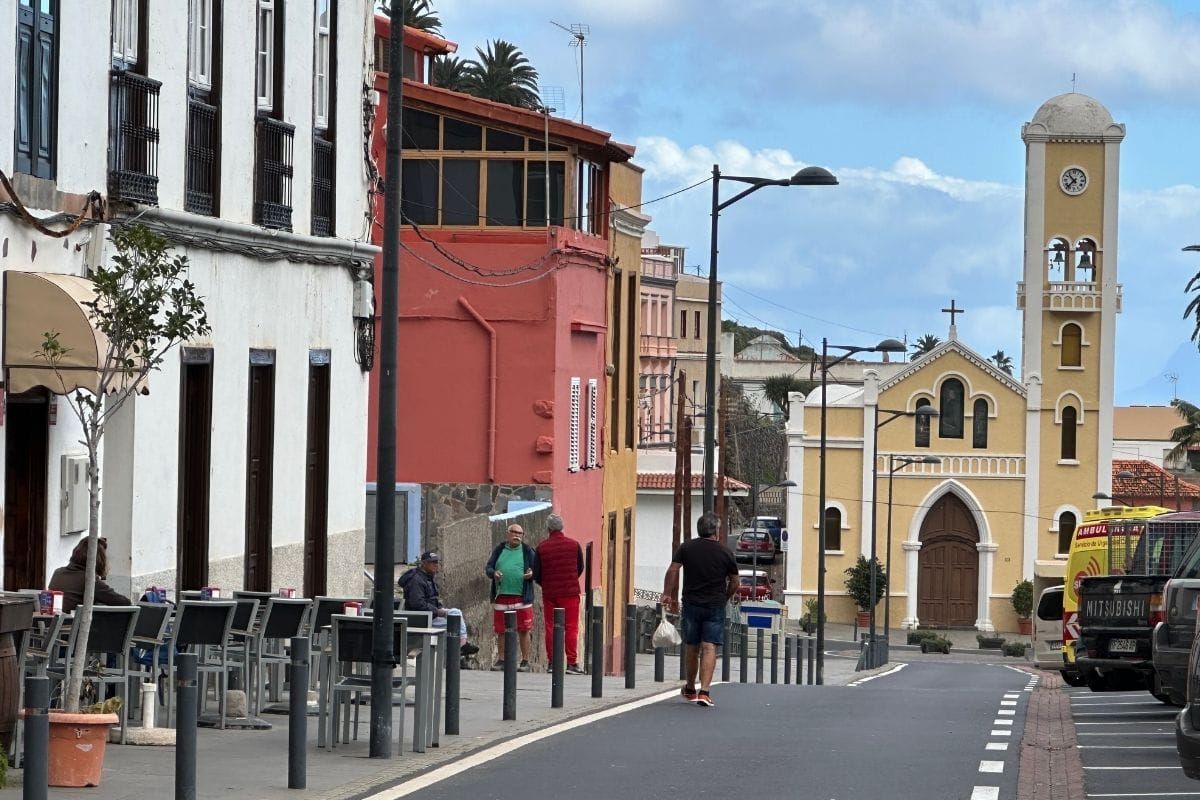
Hermigua is a good base if you want to spend several days exploring La Gomera's northern villages, coast and forests. It also works as a half-day stop, with time for a village walk, Los Telares and something to eat.
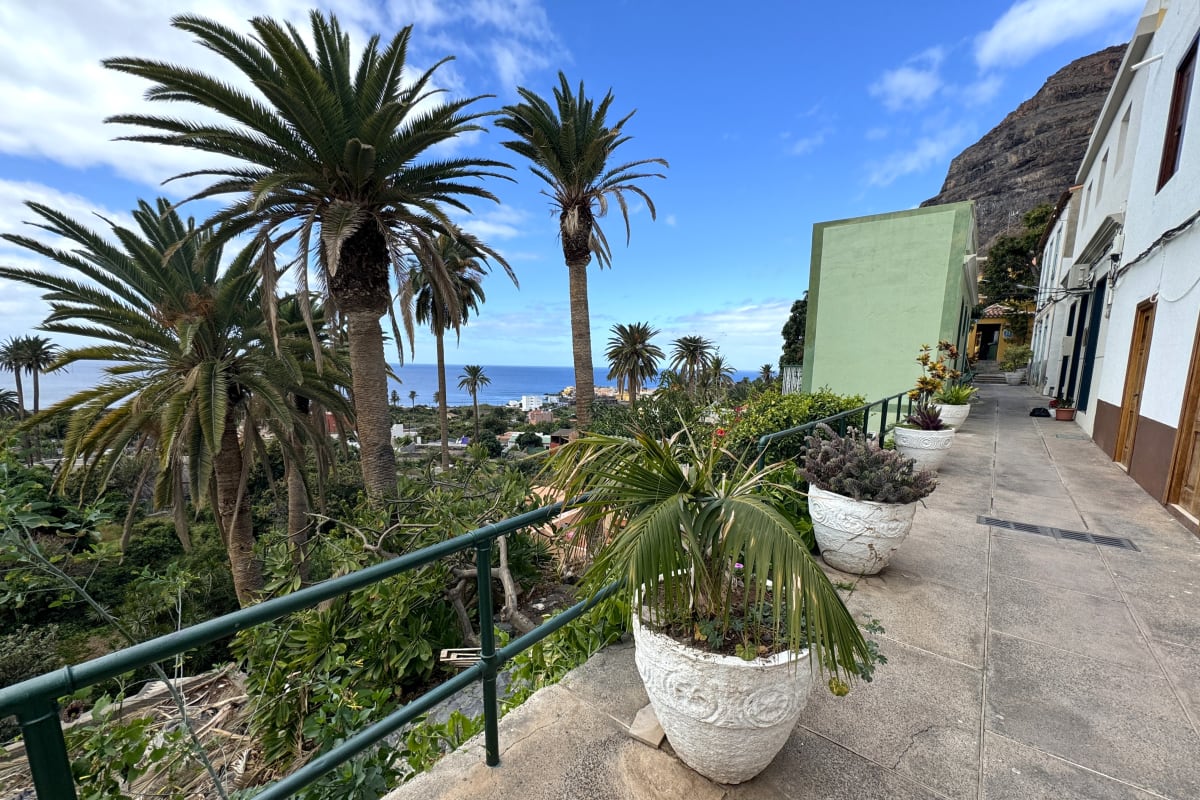
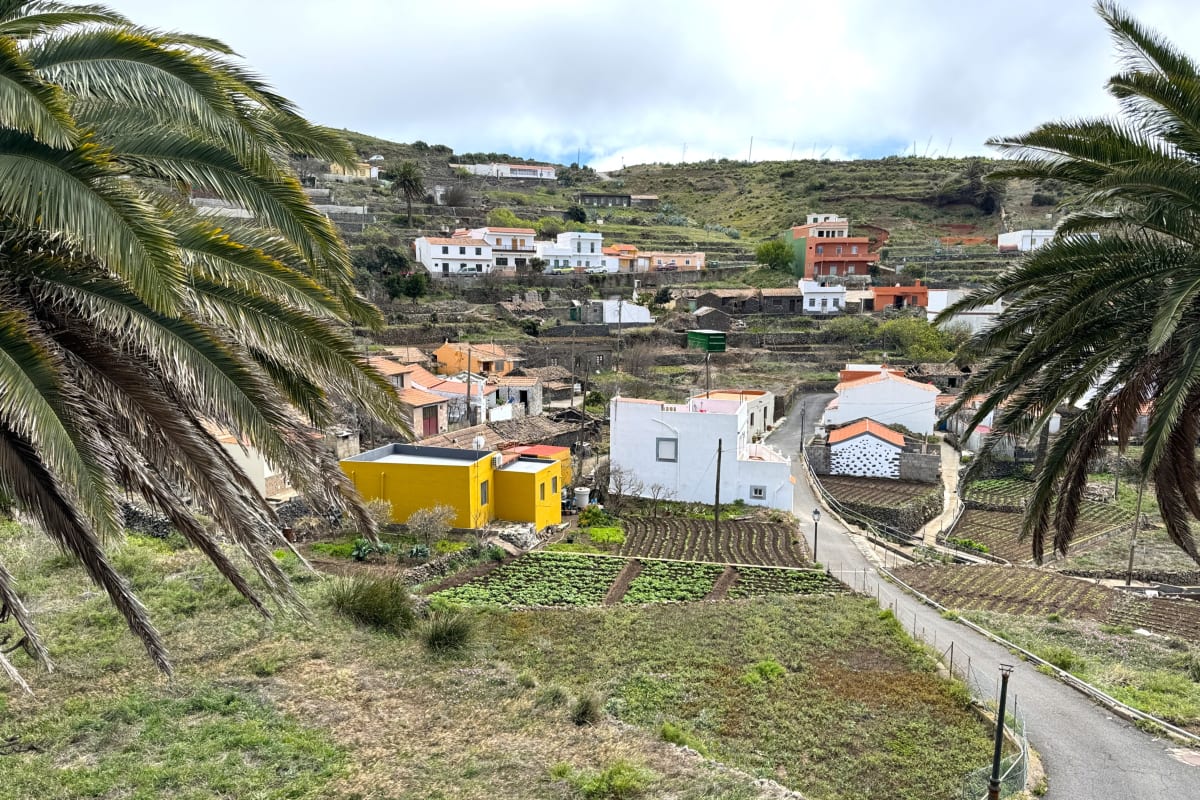
The settlement unfolds down a green valley towards the Atlantic, with houses between cultivated terraces and steep mountain slopes. From the rocks above El Convento to the banana plantations and surf at Santa Catalina, the scenery changes as you make your way down.
What to see and do in Hermigua
Explore the valley and its neighbourhoods
Around El Convento in the upper village, the mountains are a close presence. Further down towards La Encarnación, the valley opens towards the banana plantations and sea. A walk in both areas reveals much more of Hermigua than following the main road through.
Above the upper valley, the two prominent rocks commonly called Pedro and Petra are hard to overlook. Their shapes give the houses and terraces below a dramatic backdrop, and they're a good reason to keep looking up as you wander.
Fields and houses sit side by side here. Between village stops, the cultivated terraces keep drawing your eye across the slopes.
Los Telares Ethnographic Park
At Los Telares, the fields and terraces outside become part of a bigger story about how people lived and fed themselves on La Gomera. A finca, gofio mill and ethnographic collection bring together the island's farming and everyday life, with an English audioguide to lead you through.
The standard self-guided visit takes about 40 minutes. Tickets start at €4.95 for adults aged 12 and over and €2.50 for children aged 4 to 11; under-fours enter free.
For a visit by bus, Line 2 has a Los Telares stop in the direction of San Sebastián. Arriving from San Sebastián, the operator lists Plaza del Convento instead; the stops differ on the two sides of the route.
Los Telares is separate from the public Ethnographic Museum in Hermigua, which the official tourism listing marks temporarily closed as of November 2026. The privately run park remains an option for a cultural stop.
Santa Catalina and the coastal views
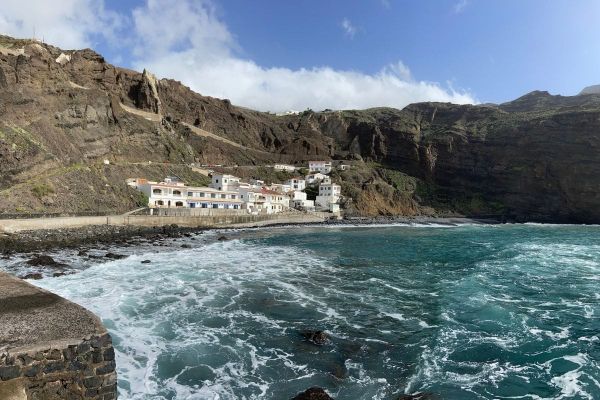
At Playa de Santa Catalina, the valley meets a broad shore of dark stones and sand. There's room here to take in the whole scene: surf in front, mountains behind and the cultivated valley running between them. It's a satisfying place to finish a wander down through Hermigua.
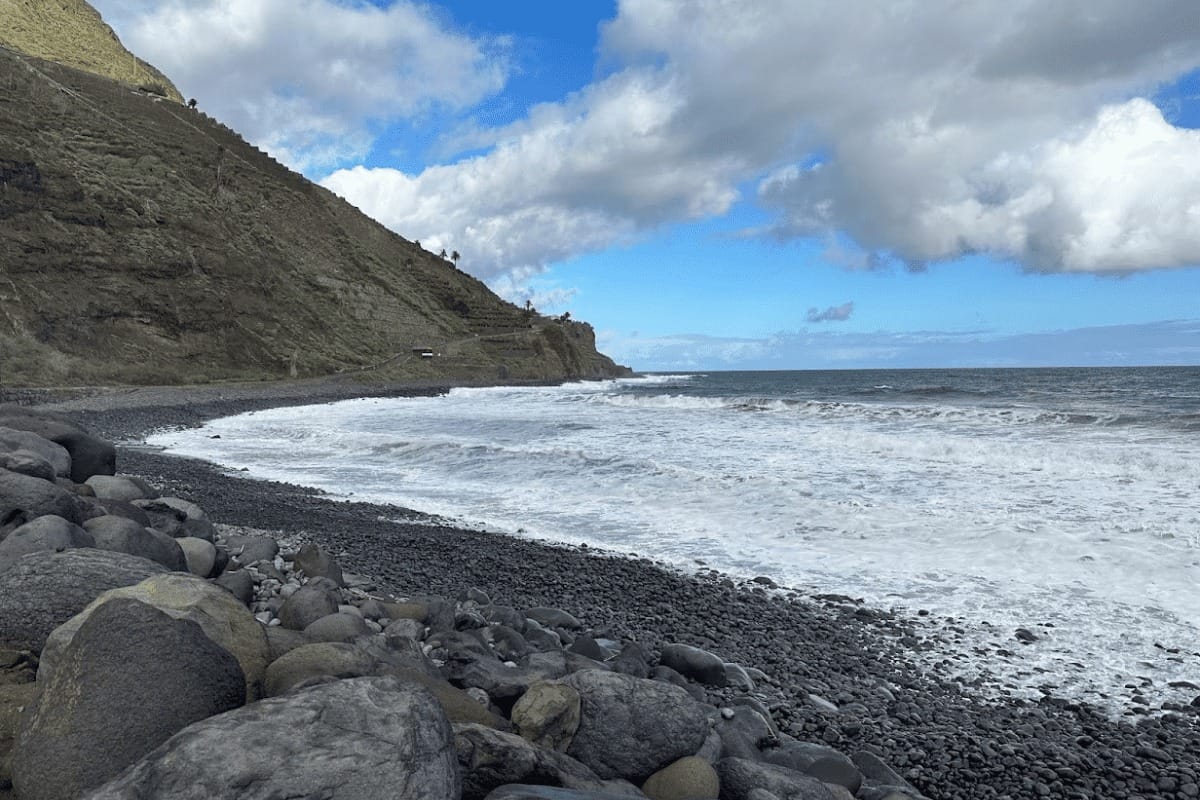
Nearby, Mirador de la Punta lifts you above the coast for views towards Tenerife. Pair it with the beach for two perspectives on the same landscape. Santa Catalina is a stop I'd choose for watching the waves, rather than swimming.
The old Pescante is part of the coast's history, but the official tourism page marks it closed because of danger. Don't plan a visit to its pool or enter the closed area.
For a view into the greener high ground, Mirador de la Carbonera has a leafy approach to a wooden platform above Hermigua. Towards Agulo, Cruz del Viento looks over Santa Catalina and the coast, with a small picnic area if you'd like to linger.
Places to visit nearby
Agulo and Mirador de Abrante
Nearby Agulo offers a change of scale: narrow lanes, tiled roofs and a compact historic centre below a wall of cliff. Visiting both villages along the GM-1 shows how much the landscape shapes each settlement.
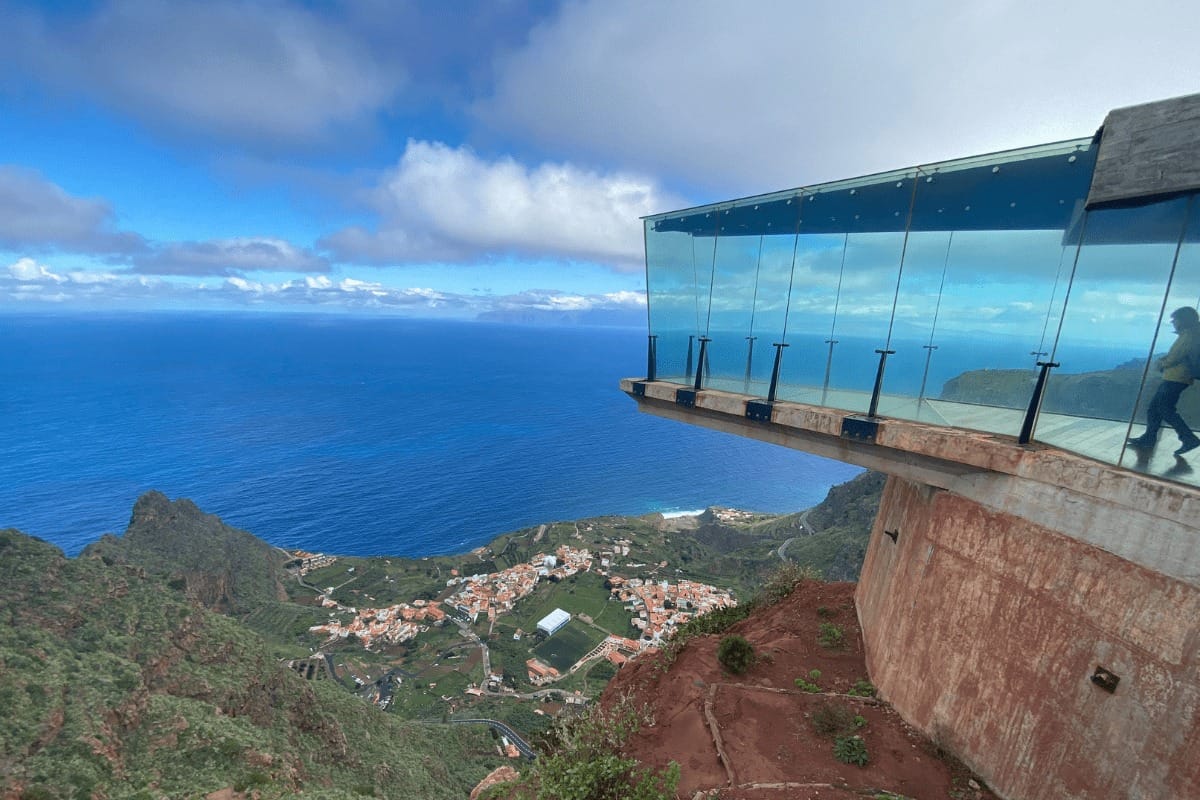
Above Agulo, the glass platform at Mirador de Abrante puts the village far beneath your feet. It's open, but services are not operating. The road winds inland and uphill to reach it, so allow for a separate drive from the village.
El Cedro and Garajonay
El Cedro brings another change of scene, with laurel woodland and a stream running through the forest. After the open valley and Atlantic coast, a walk beneath the trees adds a different side of La Gomera to your stay.
You can drive to a forest starting point or make a longer walking day of it. Routes linking the valley with the high ground involve substantial climbing, so the choice is really how much of the mountain you want to include in the walk.
Playa de la Caleta
La Caleta is another coastal outing from Hermigua, reached by a winding road. Allow around 15 minutes by car from the valley, with the exact journey depending on where you're starting.
Its small bay gives a different setting from the open shore at Santa Catalina. It's a pleasant option for some time by the sea, but swimming still depends on the Atlantic conditions that day. Our La Gomera beach guide helps compare it with other stops around the island.
Eating and drinking in Hermigua
A coffee stop or a leisurely lunch fits Hermigua well. Restaurants are dotted along the valley, making it easy to build a meal into whichever part you're exploring rather than returning to one central square.

The Los Telares terrace restaurant serves local cooking, so you can follow a visit to the mill and ethnographic park with lunch. Our La Gomera food guide explains the dishes and ingredients you'll find on menus.
Staying in Hermigua
A view across the terraces is a good reason to linger in Hermigua. Apartments, holiday homes and small hotels give you a choice of bases, with the northern villages, coast and forests close enough to fill several days.

The main decision is where in the valley to stay. El Convento, the lower village and the slopes above each offer a different outlook. Without a car, I'd choose somewhere close to meals and a bus stop; that terrace view comes with an uphill walk home.
Hermigua particularly suits a holiday mixing village walks, forest outings and time by the sea. For resort facilities and days devoted to beach swimming, I'd look elsewhere.
Getting there and practical details
The GM-1 from San Sebastián reaches Hermigua in roughly half an hour by car. Open Hermigua on Google Maps to find the part of the valley you're visiting; the settlement stretches well beyond a single centre.
Guagua Gomera's Line 2 connects San Sebastián, Hermigua, Agulo and Vallehermoso, using different stops in each direction. Coming from San Sebastián, stops include Plaza del Convento and Plaza de la Encarnación. Heading back towards San Sebastián, they include Los Telares and Casa de la Cultura. Centro de Salud de Hermigua is served in both directions.
With a car, a couple of parking stops let you explore different parts of the valley on foot. Shops and services follow the main settlement, with some accommodation higher up the side roads.
Would I stay in Hermigua?
Hermigua's appeal is the variety within one valley: farmland and village streets, a working history to explore at Los Telares, and the Atlantic at the bottom of it all. I'd come for a half-day visit and consider staying for several nights, especially with the forest and northern villages on the itinerary.