Pescante de Agulo, La Gomera: The Walk to the Old Harbour
Walk from Agulo to its ruined coastal loading pier, with route details, the climb back, our photos and a Happy Backpack video.

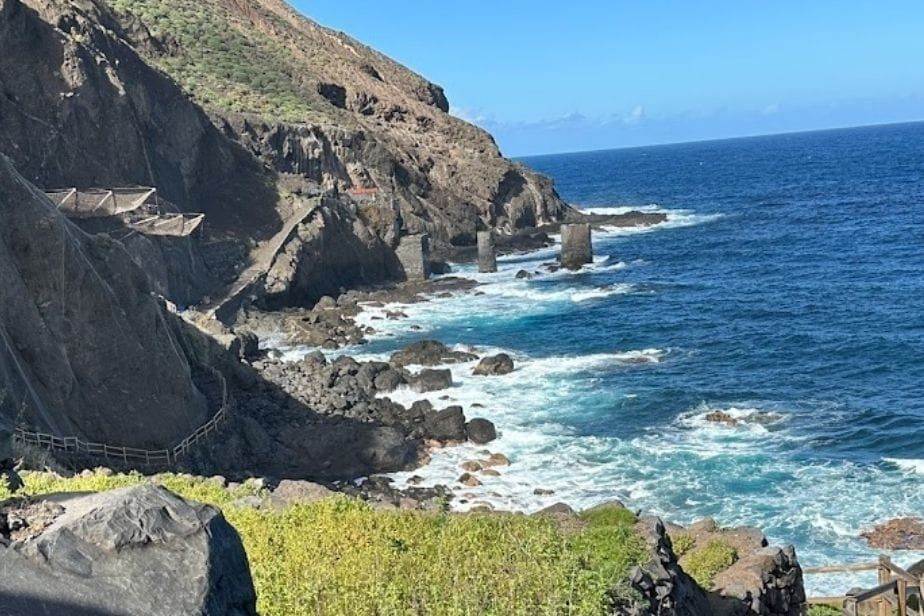
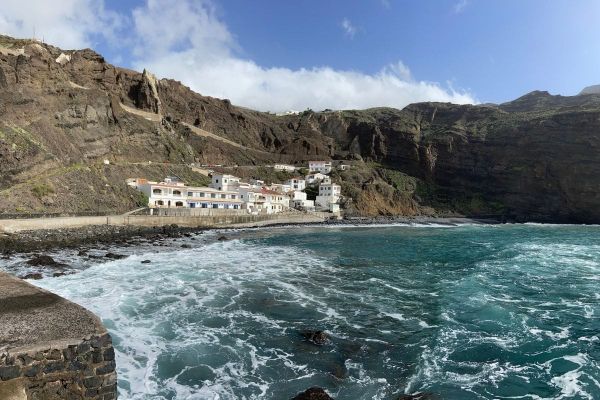
The walk to Pescante de Agulo far exceeded our expectations. The remains of the old loading pier are interesting enough, but it was the setting that made the visit: the cliff behind us, the Atlantic in front and waves breaking hard against the rocks.
This is a downhill walk from Agulo with a substantial climb back. Save it for settled weather, wear walking shoes and give yourself time at the coast. Looking down from the village doesn't quite prepare you for how different it feels at the bottom.
The walk at a glance
- Start and finish: Plaza Leoncio Bento in Agulo
- Distance: About 2.9 km return from the square
- Ascent: About 300 m on the return
- Time: Allow 1.5 to 2 hours, plus longer stops
- Difficulty: Moderate, with a sustained descent and climb
- Route: Out and back to the old coastal loading pier
These figures come from Agulo's official El Pescante route. Add the walk to the square if you park elsewhere in town.
Our coastal walk on video
Our Happy Backpack video follows the descent towards the old harbour. It shows both the path and the scale of the coast below Agulo.
From Agulo to the cliff path
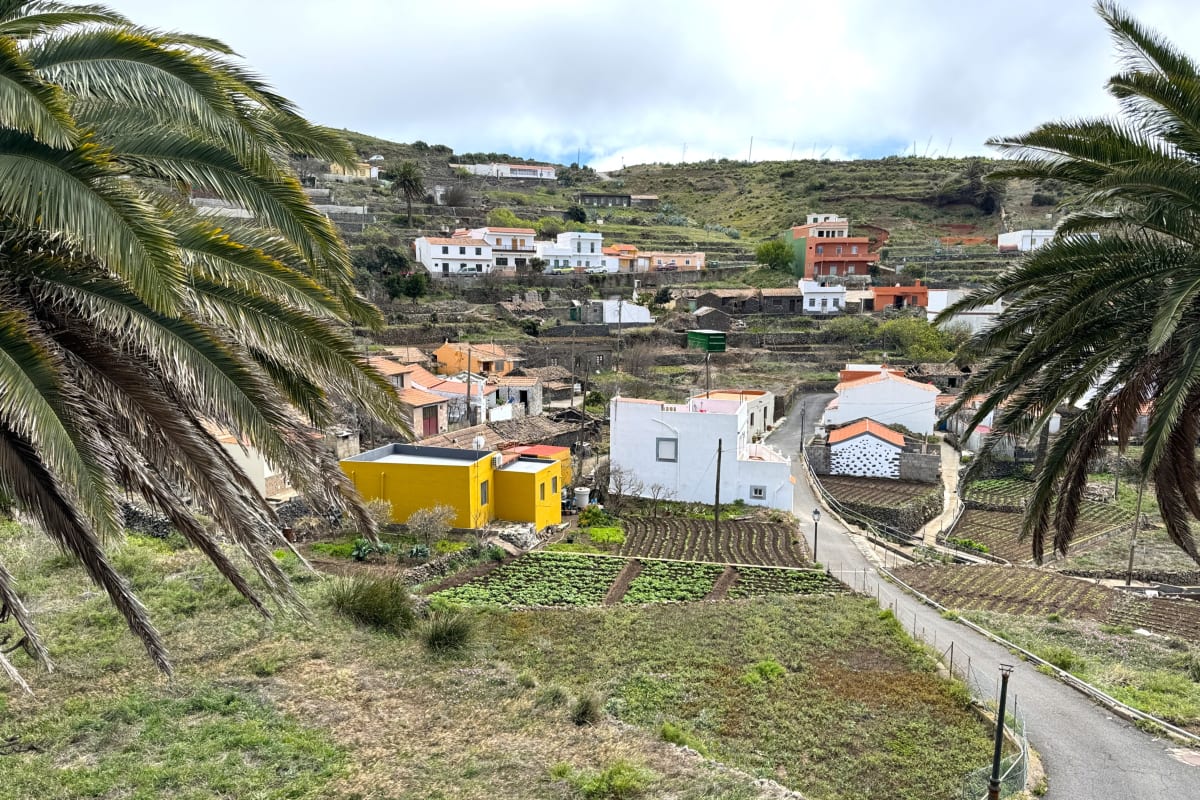
We would park in a legal space along the GM-1 or elsewhere on the edge of Agulo and walk into the village. The narrow old streets are more enjoyable on foot than through a windscreen.
The official route starts in Plaza Leoncio Bento and follows Callejón de la Seda. It shares the GR-132 for the first 300 metres before taking the El Transportador road towards La Verdura and the start of the coastal descent.
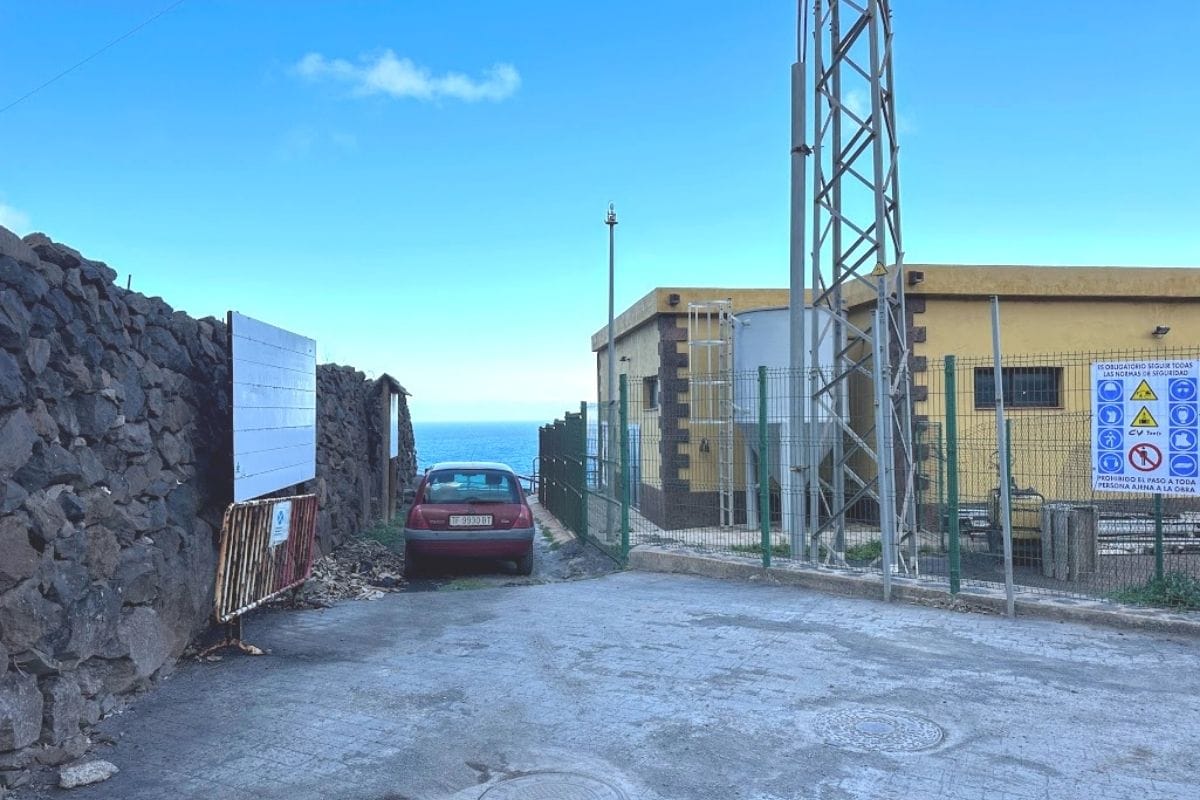
Our approach reached the path beside a yellow building and stone wall. This is where the road gives way to the switchbacks down the cliff.
Down the switchbacks
The path is a mixture of stone, earth and steps, winding down towards the shore. Many of the steps are shallow, but there are plenty of them. The slope is sustained rather than technically complicated, and you can see a good deal of the route below.
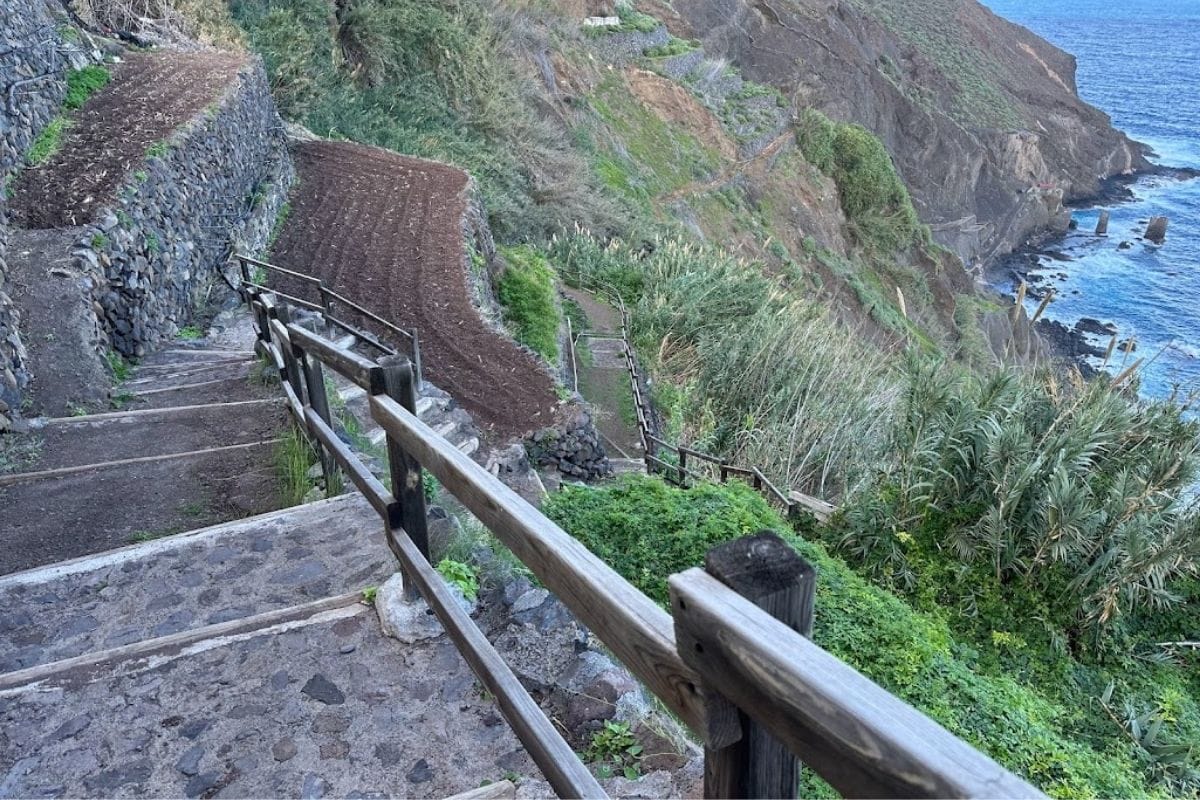
As you descend, the remains of the pescante become easier to pick out. Pause on a comfortable section of path for the views rather than trying to look out to sea while negotiating the steps.
The old pier and the Atlantic
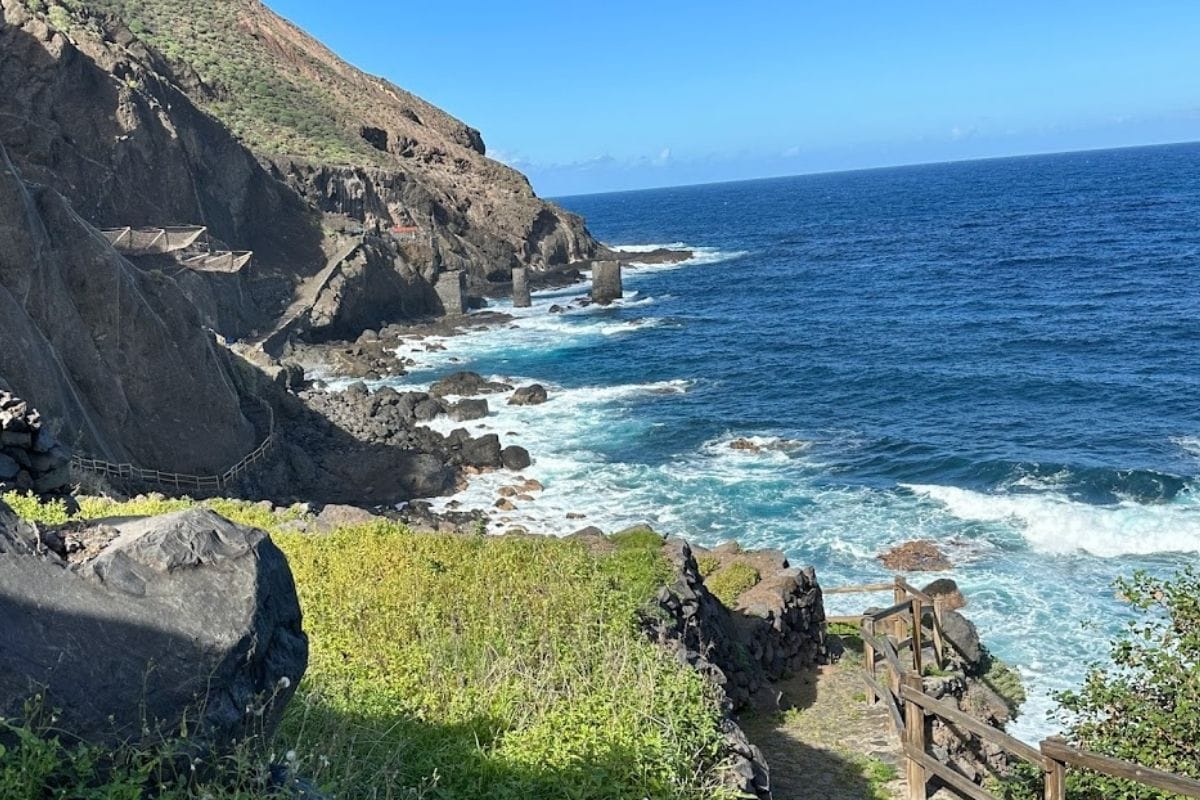
Agulo's pescante was built in 1908 to load fruit onto ships. A later warehouse and cable system helped move cargo down to the pier. A sea storm destroyed the structure in April 1954, ending its working life.
Today, the surviving pillars make more sense when you imagine that busy connection between the fields above and the ships offshore. It is a small piece of industrial history in a very exposed place.
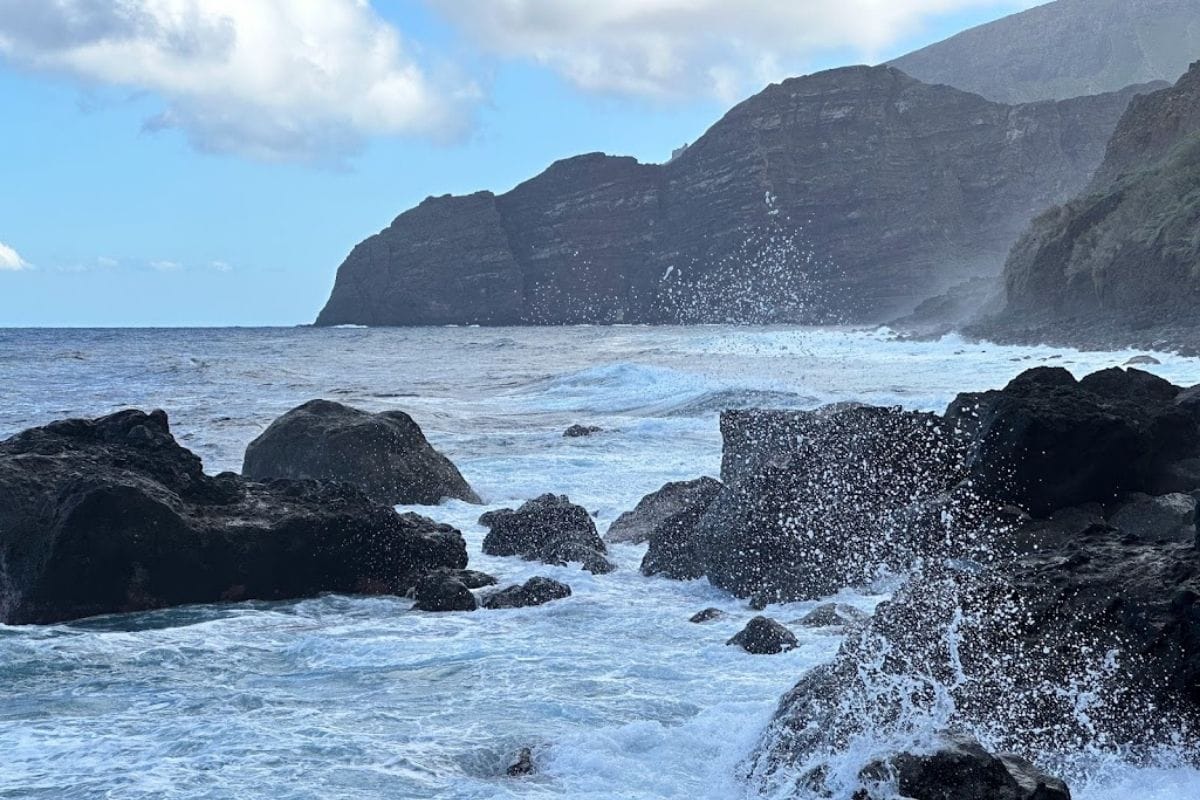
The waves were a large part of what impressed us, but this is a place to watch the sea from a safe distance. Stay back from wet rocks and breaking waves, and respect any barriers or closures. We would not plan this walk around a swim.
The climb back to Agulo
Return by the same route. Nearly 300 metres of climbing is enough to make the village feel higher than it did on the way down, particularly in the sun. Carry water and allow time for a steady ascent.
Back in town, our Agulo guide covers the streets, places to eat and nearby viewpoints. Lunch in the village is a sensible follow-up to those steps.
We wouldn't send you down just to tick off some old concrete pillars. We would send you for the whole walk: the approach through Agulo, the changing view on the descent and that close encounter with the coast. The ruined pier gives it a story, but the Atlantic supplies most of the drama.