Vallehermoso: A Town Walk, Valley Views and Where to Stay
Explore Vallehermoso's old streets, Roque Cano views and botanical garden, with our walking video, food suggestions, accommodation and bus information.

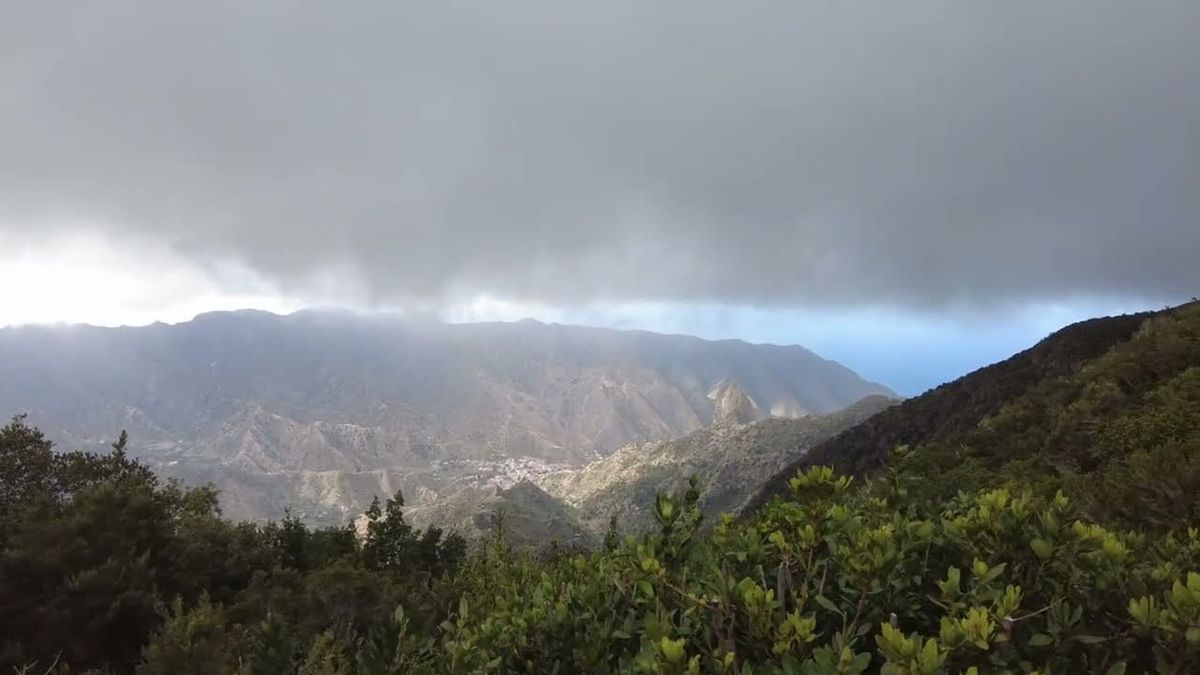
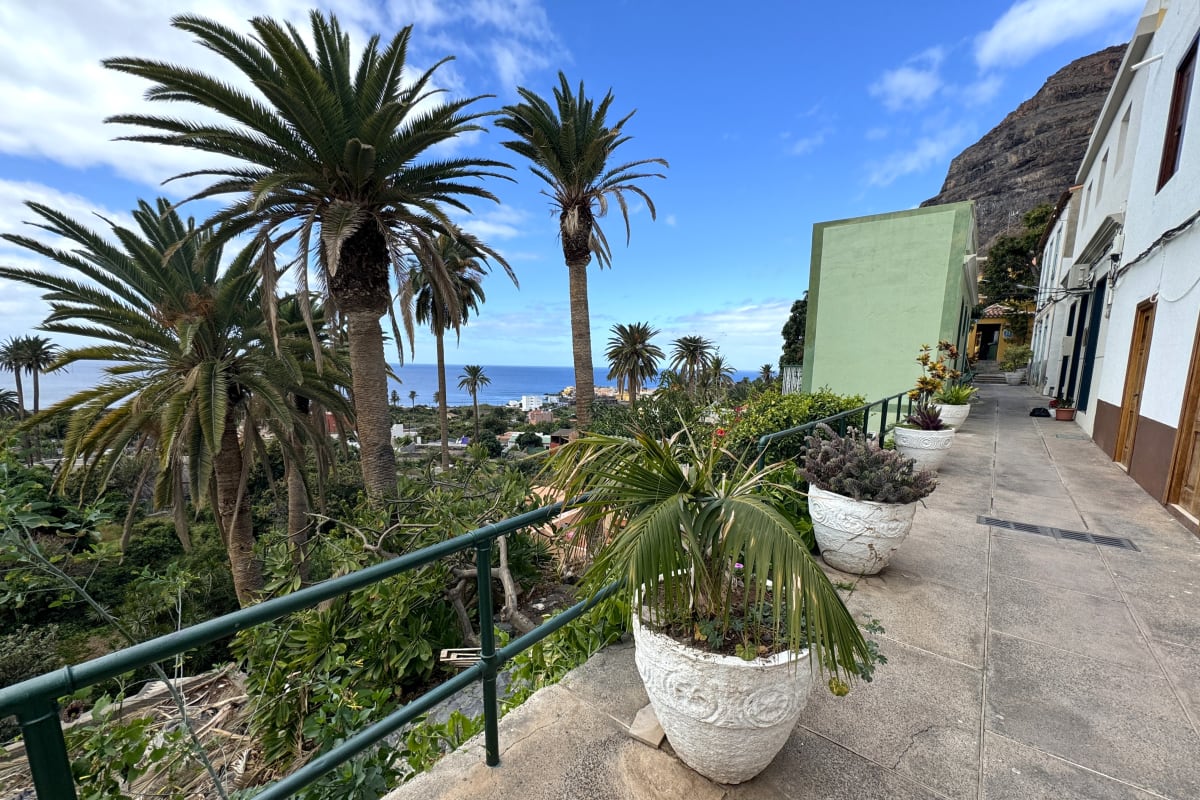
Roque Cano is difficult to ignore in Vallehermoso. The rock rises above the houses and cultivated slopes, appearing between buildings as you walk around town. You can admire the church, investigate a side street or settle at a café, and there it is again, rather upstaging everything.
Below it, Vallehermoso is a small north-coast town with old houses, a central square and a valley leading down to the sea. We'd come for a relaxed wander and lunch, with a viewpoint or the botanical garden added to make a fuller day. It also makes an appealing base if walking and quieter evenings are the reason you're visiting La Gomera.
Start in the square
Plaza de la Constitución is a sensible starting point. Explore the streets around it, then follow Calle Mayor towards the Church of San Juan Bautista. The centre is small enough to enjoy without a rigid route, with painted façades, wooden details and tiled roofs to catch your attention.
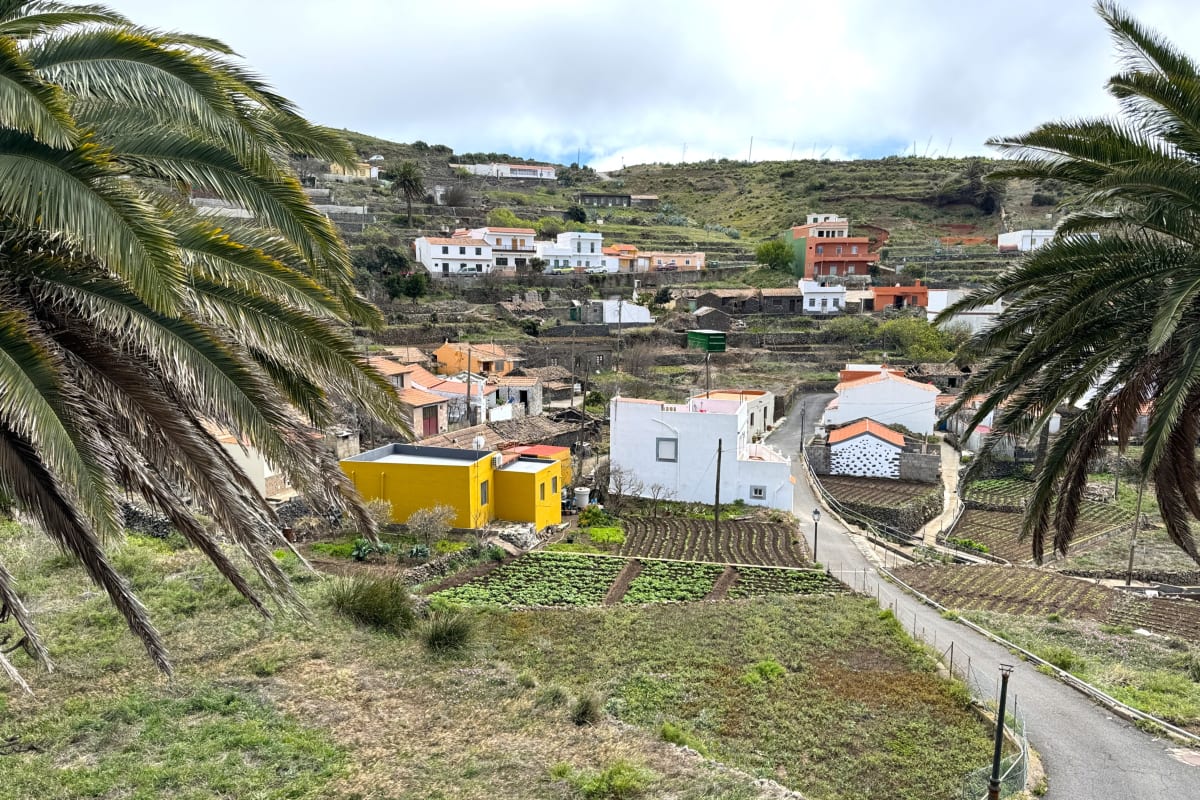
The older streets extend into Triana and Vegueta. Look at how the houses sit against the slopes and how quickly the cultivated landscape comes into view. Vallehermoso's appeal lies in that closeness between town and valley; you don't have to go far to see both.
We'd allow an hour or two for the centre at an unhurried pace, including a coffee stop. That's a planning allowance, not a walking challenge. A visit can easily stretch through lunch without needing a long list of attractions.
Walk through Vallehermoso with us
Our Happy Backpack video takes you through the town's streets and valley setting. It gives you a closer look at the houses, surrounding slopes and Roque Cano before deciding whether to call in for lunch or make Vallehermoso your base.
A walk around Vallehermoso with The Happy Backpack.
A little context for the streets
Vallehermoso grew as an agricultural and trading centre, with wine and bananas among the products linked to its past. The terraced hillsides are evidence of how much effort has gone into farming this terrain. The landscape around the town is shaped by work as well as geology.
The Church of San Juan Bautista is one of the central landmarks. Its present appearance reflects rebuilding over time, including neo-Gothic features. Around it, the interest is in the smaller details of the houses and streets; we'd spend as much time looking at those as at the church itself.
One useful distinction when planning: Vallehermoso is also the name of a large municipality stretching across the island. An attraction described as being 'in Vallehermoso' might be nowhere near this town. Chipude and Alojera, for example, belong to the wider municipality, but they aren't extra stops on a short walk from the square.
Roque Cano and the viewpoints
You can enjoy Roque Cano from the town and surrounding valley without planning a climb. Its outline helps you keep your bearings, and the viewpoints show how the houses and terraces fit beneath it.
Mirador del Almendrillo is beside the GM-1 as you approach from the Agulo side. There's parking and a short walk onto the terrace, making it a convenient stop before heading into the centre.
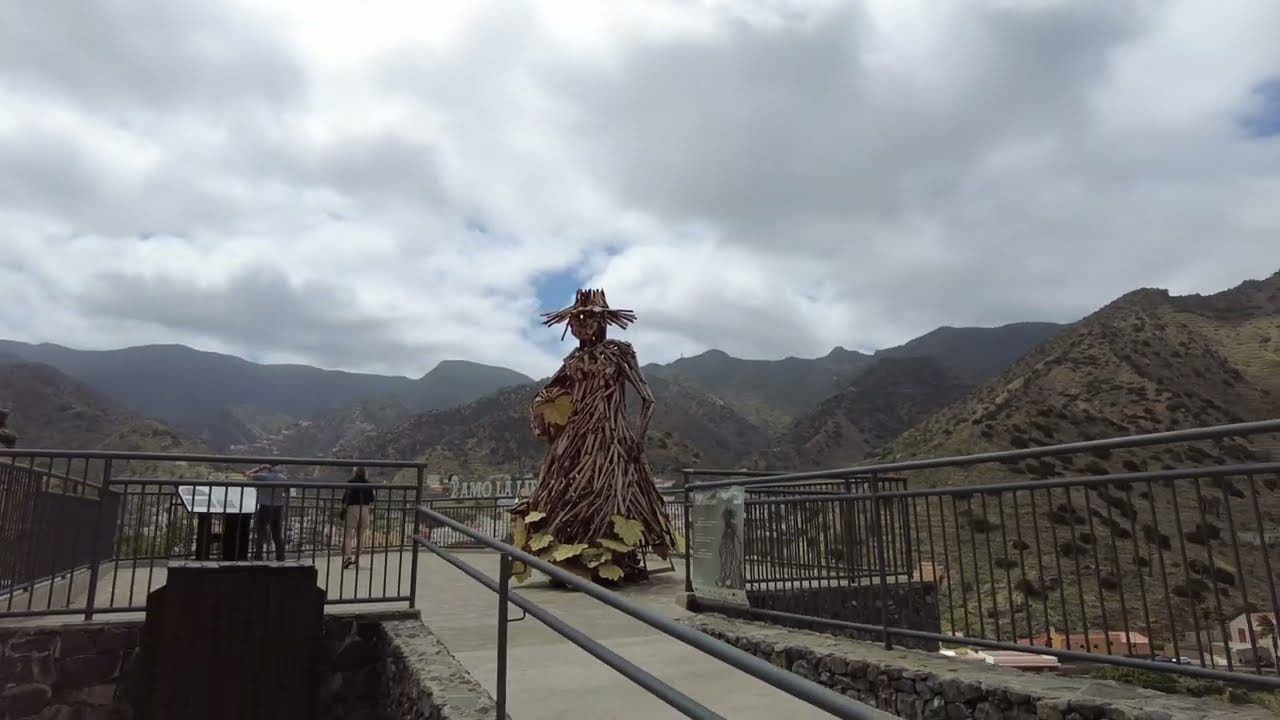
Farther up, Mirador de Vallehermoso looks across the broader valley from the forested heights. It gives you a much bigger landscape, although low cloud can hide the detail. We'd include it when travelling through the uplands, choosing Almendrillo for a closer look near town.
The botanical garden
The Jardín Botánico del Descubrimiento lies in San Pedro beside the road towards the beach. It combines plants from several continents with species associated with La Gomera, including Canary Island palms, dragon trees and wild olives.
This is a useful addition if you like seeing what grows in the landscape you've been driving through. The garden also has fruit trees, a water-lily pond and places to sit, so the visit can stay leisurely. The tourism authority lists visiting hours of 9 am to 4:30 pm, with guided visits available by prior reservation.
Continue down the valley to the sea
Vallehermoso's centre is inland, so reaching the coast is a separate outing. The official GR 131.1 route runs from the town to Playa de Vallehermoso over a little more than 3.5 km, descending through the agricultural valley.
The published walking time is about 50 minutes one way. Allow longer for stops and remember that walking back adds the return distance and climb. We'd set aside at least a couple of hours for a relaxed out-and-back, rather than treat the beach as a ten-minute detour from lunch.
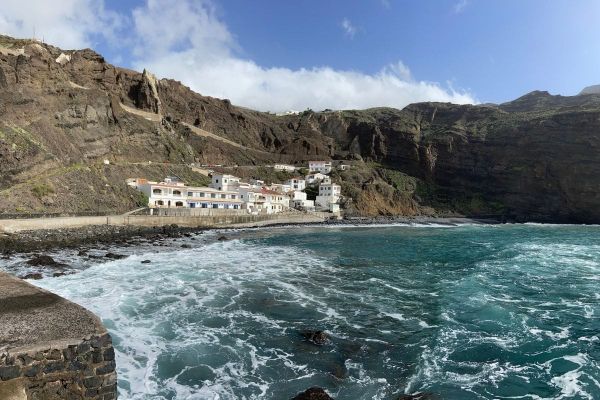
The coast has a dark beach, cliffs and the remains of the old loading structure used to move agricultural goods out by sea. Come for the coastal scenery; a town-to-beach walk doesn't need to end with a swim.
There is also a maritime pool complex by the beach, which the tourism guide describes in a summer context. We wouldn't plan an out-of-season visit around the pools being open.
Where to eat and what to try
Keep lunch in the town centre if you're combining a street wander with the garden or coast. It's easier to enjoy those outings when you aren't also trying to locate a restaurant at the far end of the valley.
Tasca Restaurante El Carraca serves Canarian food. Its published offering includes almogrote, papas arrugadas with mojo, meat and fish dishes, and homemade desserts such as leche asada. Those dishes make a good starting point if you'd like to try some island cooking.
Vallehermoso is also associated with local products including palm syrup, cheese and mistela. If you're browsing shops before leaving, those are more interesting souvenirs than another fridge magnet. Our La Gomera food guide explains what to look for and how the ingredients are used.
Would we stay in Vallehermoso?
Yes, for a trip centred on walking, the northern valleys and evenings in a small town. Staying here lets you enjoy the streets after a day out without a return drive across the island. It is a quieter proposition than a holiday on Valle Gran Rey's waterfront.
Hotel Rural Triana is a restored Canarian house on Calle Triana, with a garden, terrace and bar/restaurant. The town location suits evenings spent walking out for a meal after a day in the hills.
Rural accommodation outside the centre can offer more space and seclusion. If you want to walk out for dinner, pay attention to the exact address: a property in the wider Vallehermoso municipality may be a substantial journey from the square.
Getting here and fitting it into a day
The GM-1 connects Vallehermoso with Agulo and Hermigua to the east. A car makes it easier to add viewpoints and the botanical garden, but the central town itself is best explored on foot.
GuaguaGomera Line 2 connects Vallehermoso with San Sebastián via Agulo and Hermigua. Line 8 connects with Valle Gran Rey. Plan around the relevant direction and day's timetable if you need to return by bus.
For a first visit by car, we'd stop at Almendrillo, wander through the centre and have lunch, then choose the botanical garden or the coast. You can fit more in, but this is one of the places where leaving a little time unallocated is half the pleasure.